“Made in Canada”: Local Sourcing as a Competitive Edge in Pet Care
by Shannon Landry
October 16, 2025
Amid lingering inflation and global supply chain uncertainty, Canadian pet owners are showing growing loyalty to domestically made products.
“Made in Canada”: Local Sourcing as a Competitive Edge in Pet Care
Amid lingering inflation and global supply chain uncertainty, Canadian pet owners are showing growing loyalty to domestically made products. “Made in Canada” has evolved beyond a label — it’s now a marker of trust, sustainability, and community support. For pet retailers, manufacturers, and suppliers, that sentiment is reshaping procurement, branding, and logistics strategies across the pet care value chain.
A Local Shift in Global Times
The pet care industry has weathered the same economic headwinds affecting food and consumer goods worldwide: pandemic-era logistics bottlenecks, shifting tariffs, and persistent inflation. As discussed in Packaged Facts’ latest Canadian Pet Market 2025 report, consumers are adjusting, but not retreating. Nearly half of Canadian pet owners report spending more on their pets even as prices remain elevated, underscoring the emotional bond between owners and animals.
Amid these pressures, local production has gained renewed appeal. Supply interruptions during 2020–2023 exposed the fragility of global sourcing networks, while cost fluctuations in imported proteins, grains, and packaging materials made domestic supply chains comparatively stable. “Made in Canada” now signals not only patriotism but also resilience, guaranteeing that products are produced closer to home, under familiar standards, and with less exposure to global volatility.
“Made in Canada” as a Value Signal
Canadian pet owners increasingly connect national sourcing with integrity, safety, and community support. A strong majority of Packaged Facts survey respondents agree that Canadian-made products are higher quality and more trustworthy than imports. This sentiment cuts across income levels and age cohorts, illustrating how national identity has become intertwined with perceived product reliability.
Corporate responsibility messaging amplifies this trend. Retailers and manufacturers such as Pet Valu, Open Farm, and Petcurean weave Canadian origin stories into sustainability campaigns, positioning local sourcing as both an ethical and environmental choice. These messages resonate with consumers seeking transparency in everything from ingredient origins to animal welfare practices.
Pet Food Leading the Charge
In the pet market, pet food is one of the categories best illustrating this trend. Pet owners are actively seeking out pet food made in Canada, with a clear majority of dog and cat owners prefering domestically produced brands. The trend isn’t merely symbolic — it’s driving real market activity. Local producers have expanded capacity, and several US brands have begun co-packing or manufacturing in Canada to capture that demand. Even more telling, when comparing usage of “Made in Canada” products among Canadian pet owners and “Made in the USA” products among US pet owners, Canadians demonstrate a notably stronger domestic preference.
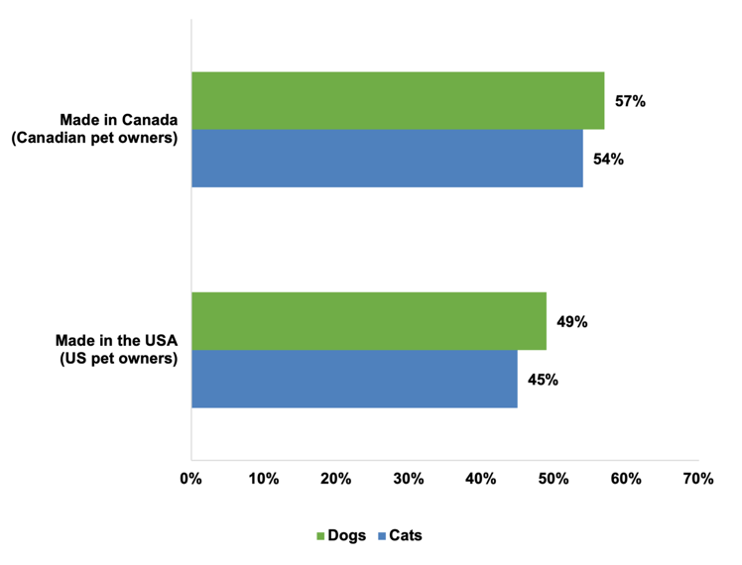
Beyond sentiment, this local focus has practical supply-chain advantages. Regional production shortens delivery routes, stabilizes ingredient sourcing, and can mitigate currency risk. For pet owners increasingly aware of food origins — and for retailers promoting Canadian-made loyalty programs — local manufacturing also strengthens consumer trust.
Supply Chain and Manufacturing Implications
For industry participants, the “Made in Canada” movement aligns squarely with broader supply-chain realignment. Rising demand for domestically produced pet food and treats will likely:
- Boost procurement from Canadian farms producing meat, poultry, fish, and specialty grains used in high-protein and functional formulas.
- Stimulate growth in domestic packaging and labeling industries, especially those supporting sustainable or recyclable materials.
- Encourage investment in cold-chain logistics as fresh and human-grade products expand their market share.
- Strengthen employment and economic impact within Canada’s main geographic areas of pet food production.
Looking Ahead
As sustainability standards evolve, “Made in Canada” could eventually form part of compliance and procurement frameworks. Retailers could expand shelf-space allocated to domestic brands, while federal and provincial programs promoting Canadian agriculture and manufacturing may further incentivize local sourcing.
For global players, the takeaway is not isolation but integration. Multinationals operating in Canada are already localizing ingredient procurement and packaging operations to meet both consumer and policy expectations. Meanwhile, smaller domestic firms have a unique opportunity to differentiate through authenticity and agility, capturing share from import-heavy competitors.
Ultimately, “Made in Canada” has moved beyond nostalgia or national pride. It reflects a structural rebalancing of the pet industry that rewards proximity, quality, and accountability. In an era where consumers crave both connection and control, local sourcing offers exactly that: a way for pet owners to feed their pets — and their values — at the same time.
Want to learn more? Check out Packaged Facts' Canadian Pet Market Survey report and Pet Knowledge Center, your resource for in-depth pet market intelligence and consumer insights.
About the blogger: Shannon Landry is the Research Director for Packaged Facts Pet and a veteran pet market research analyst.
Have unique research needs?
Freedonia Strategic Insights listens intently to your needs and objectives. Then we work diligently to define and deliver a service to meet them.Subscribe to Our Blog
Stay up to date with the latest information about new market research and news in areas relevant to your business from our analysts and team members.Packaged Facts Blog Subscription
Provide the following details to subscribe.