Global Faucets & Taps
This study analyzes the global market for faucets and taps.

Free Sample Report
Request a free sample of this report and our team will email it to you.
Report Overview
Featuring 55 tables and 41 figures – now available in Excel and Powerpoint! Learn More
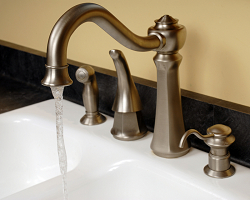
This study analyzes the global market for faucets and taps, which include:
- bathroom sink (lavatory) faucets (e.g., two-lever controls, single-lever controls, wall-mount, commercial-grade)
- bathtub and shower faucets (e.g., single- and double-lever bathtub and shower controls, bathtub and shower combinations, showerheads, personal showers, bathtub fillers and spray units)
- kitchen sink and other faucets including bar faucets, sediment and sill (i.e., outdoor) faucets, and faucets for laundry and other utility sinks
Study Scope
Related plumbing fixtures and fittings – including sinks, bathtubs, and showers – are excluded.
In addition, major manufacturers of faucets and taps are identified. Historical data for 2009, 2014, and 2019 and forecasts to 2024 and 2029 are provided in current dollars (which are not adjusted to account for inflation) for each major product segment.
Historical and forecast demand by market is provided in current dollars for:
- new residential construction
- residential improvement and repair
- new nonresidential construction
- nonresidential improvement and repair
- transportation equipment (e.g., RVs, watercraft, civilian aircraft)

Demand by Region
Global demand for faucets and taps is anticipated to grow 3.6% annually through 2024 to $18.6 billion. The leading Asia/Pacific market will remain by far the largest regional faucet and tap fixture market, accounting for 62% of global market gains through 2024, bolstered by the massive housing stocks in China and India and rising penetration of indoor plumbing.
Despite below average anticipated growth due to market maturity, the second and third leading global markets, North America and Western Europe, will also contribute to advances based on growth in building construction.
The fastest advances are expected in the emerging Africa/Mideast market due to rising incomes and expanding access to water delivery and sanitation networks. Despite comprising just 6% of global faucet and tap demand in 2019, the region is expected to account for 11% of global market gains through 2024.

Demand by Market
Through 2024, the leading residential market will continue to drive global demand for faucets and taps. Though the dominant improvement and repair segment will account for a slightly larger share of gains, the new residential market will see faster growth, bolstered by increases in new housing construction in most developing countries. Residential market advances will also be supported by:
- the higher value faucets typically employed in home renovations in mature markets
- rising incomes in many of these countries and expanding access to water delivery and sanitation systems in developing countries enabling households to install these products for the first time
Below average growth in the nonresidential market will restrain faster gains – particularly as the COVID-19 pandemic either exacerbates already weak markets or creates significant short-term losses from which countries must recover.
Pricing Trends
Faucets and taps are largely commodity-type products used in building construction markets. These products are made using well-known production technology and, in some cases, have limited opportunities for production innovation.
Prices for most faucets and taps will rise modestly going forward, restrained by such factors as:
- moderate price increases for raw materials such as vitreous china and metal
- the basic nature of most faucet and tap designs that helps to streamline production processes
- the increasing share of global demand supplied by countries with low production costs, especially for commodity-grade products installed in such end uses as starter homes and nonresidential structures
Prices will rise most strongly in bathtub and shower faucets, primarily due to a shift in product mix toward higher value products, such as products that:
- have value-added features, such as:
- touchless faucets
- LED and aromatherapy showerheads
- senior-friendly personal showers and sensor-controlled showerheads
- greater aesthetic appeal (e.g., decorative handles or finishes)
- meet more stringent water efficiency standards
Sustainability & Water Conservation
Water conservation is an important factor affecting purchases of faucets and taps, with many governments mandating or incentivizing installations of higher value water-efficient products – particularly in North America and Western Europe, but also in parts of the Asia/Pacific and Africa/Mideast regions, where water scarcity is a recurring issue. Additionally, homeowners and businesses often prefer water-efficient plumbing fixtures due to the long-term savings they can represent in terms of lower water and sewage bills.
A plumbing fixture’s water efficiency is typically defined by industry and government standards that can earn product certifications such as the US Environmental Product Agency’s WaterSense label. Examples of water-efficient faucets and taps include low-flow faucets and showerheads (i.e., models with a flow rate of 2.75 gallons per minute or less), which can reduce water usage by as much as 60% compared to standard fixtures.
Growing demand for water-efficient faucets and taps in both new and improvement and repair applications will continue to boost the value of the global faucet and tap market, especially as efforts expand to curb the effects of climate change, such as water shortages.
Global demand for faucets and taps is forecast to rise 3.6% annually through 2024 to $18.6 billion. Following weakened global building construction activity in 2020 due to the COVID-19 pandemic and a subsequent decline in demand, the market is expected to rebound in 2021 as case numbers fall, economies reopen, and building activity returns to pre-pandemic levels. Through 2024, gains will be supported by:
- growth in housing completions and nonresidential building construction, particularly in the Asia/Pacific region, by far the world’s largest market
- rising nonresidential remodeling as commercial and retail spaces retrofit for COVID-19 safety with higher value touchless faucets
- rising incomes and expanding access to water delivery and sanitation networks in developing markets
- home improvement trends in developed markets calling for bathroom additions, kitchen expansions, and more aesthetic and better performing faucets to boost home value
- government mandates or incentives in many countries driving adoption of water-efficient faucets and showerheads, which typically cost more than other types
New Construction Trends in Developing Countries Will Continue to Drive Gains
Growth in homebuilding activity and new nonresidential construction in developing countries will continue to drive gains, as rising incomes and expanding access to water delivery and sanitation networks in these areas allows opportunity for new sales. The Asia/Pacific region, led by China, will continue to account for the majority of global gains, while the Africa/Mideast region will see the fastest growth, with healthy outlooks for construction spending the key driver in each.
Rising Renovation Activity Will Support Growth in Developed Markets
As new construction is expected to stall in much of North America and Western Europe, demand growth in these developed faucet markets will be supported by rising renovation activity, which surged amid the COVID-19 pandemic and is expected to remain elevated. Upgrading faucets or showerheads is a popular DIY home renovation – an especially important trend in the US market – because it is relatively low cost and easy for nonprofessionals to do. Additionally, the pandemic has boosted commercial renovations such as faucet replacement in public restroom facilities, where higher value touchless faucets and other fixtures are increasingly installed because they improve their hygiene and sanitation.
Housing & Water Initiatives Continue to Bolster Sales
Global faucet demand will be boosted by clean water initiatives, such as India’s Swachh Bharat initiative, which are enabling more households in developing countries to install basic bathroom faucets for the first time. Additionally, government efforts to address substandard housing in large countries such as Brazil and Turkey will bolster demand as more of the population gains access to housing connected to water delivery and sanitation networks.
- Executive Summary
- About This Report
- Report Details
- Study Scope & Product Description
- Impact of COVID-19 Pandemic
- Overview
- Historical Market Trends
- Demand by Region
- Leading Country Markets
- Demand by Market
- Pricing Trends
- Key Trends & Growth Opportunities
- Sustainability & Water Conservation
- Style & Aesthetics
- Touchless Faucets & Smart Products
- Market Share & Leading Producers
- Product Types
- Demand by Type
- Bathroom Sink Faucets
- Bathtub & Shower Faucets
- Other Faucets (Kitchen, Bar, Utility Sink Faucets, Spigots)
- North America
- North America: Faucet & Tap Market Size
- North America: Demand by Country
- North America: Demand by Market & Type
- United States
- United States: Faucet & Tap Market Size
- United States: Demand by Market & Type
- Canada
- Canada: Faucet & Tap Market Size
- Canada: Demand by Market & Type
- Mexico
- Mexico: Faucet & Tap Market Size
- Mexico: Demand by Market & Type
- Central & South America
- Central & South America: Faucet & Tap Market Size
- Central & South America: Demand by Country
- Central & South America: Demand by Market & Type
- Brazil
- Brazil: Faucet & Tap Market Size
- Brazil: Demand by Market & Type
- Other Central & South America
- Other Central & South America: Faucet & Tap Market Size
- Other Central & South America: Demand by Market & Type
- Western Europe
- Western Europe: Faucet & Tap Market Size
- Western Europe: Demand by Country
- Western Europe: Demand by Market & Type
- Germany
- Germany: Faucet & Tap Market Size
- Germany: Demand by Market & Type
- France
- France: Faucet & Tap Market Size
- France: Demand by Market & Type
- United Kingdom
- United Kingdom: Faucet & Tap Market Size
- United Kingdom: Demand by Market & Type
- Italy
- Italy: Faucet & Tap Market Size
- Italy: Demand by Market & Type
- Spain
- Spain: Faucet & Tap Market Size
- Spain: Demand by Market & Type
- Other Western Europe
- Other Western Europe: Faucet & Tap Market Size
- Other Western Europe: Demand by Market & Type
- Eastern Europe
- Eastern Europe: Faucet & Tap Market Size
- Eastern Europe: Demand by Country
- Eastern Europe: Demand by Market & Type
- Russia
- Russia: Faucet & Tap Market Size
- Russia: Demand by Market & Type
- Other Eastern Europe
- Other Eastern Europe: Faucet & Tap Market Size
- Other Eastern Europe: Demand by Market & Type
- Asia/Pacific
- Asia/Pacific: Faucet & Tap Market Size
- Asia/Pacific: Demand by Country
- Asia/Pacific: Demand by Market & Type
- China
- China: Faucet & Tap Market Size
- China: Demand by Market & Type
- India
- India: Faucet & Tap Market Size
- India: Demand by Market & Type
- Japan
- Japan: Faucet & Tap Market Size
- Japan: Demand by Market & Type
- South Korea
- South Korea: Faucet & Tap Market Size
- South Korea: Demand by Market & Type
- Taiwan
- Taiwan: Faucet & Tap Market Size
- Taiwan: Demand by Market & Type
- Other Asia/Pacific
- Other Asia/Pacific: Faucet & Tap Market Size
- Other Asia/Pacific: Demand by Market & Type
- Africa/Mideast
- Africa/Mideast: Faucet & Tap Market Size
- Africa/Mideast: Demand by Country
- Africa/Mideast: Demand by Market & Type
- Turkey
- Turkey: Faucet & Tap Market Size
- Turkey: Demand by Market & Type
- Other Africa/Mideast
- Other Africa/Mideast: Faucet & Tap Market Size
- Other Africa/Mideast: Demand by Market & Type
- Appendix
- Scope
- Definitions
- Freedonia Methodology
- Study-Specific Methodology
- Sources
- Associations & Agencies
- Related Studies & Reports
- Country Lists by Region
- Macroeconomic Assumptions
- Economic Environment
- Demographic Trends
- Global Residential Building Construction Outlook
- Global Nonresidential Building Construction Outlook
Growth in homebuilding activity and new nonresidential construction in developing countries will continue to drive gains, as rising incomes and expanding access to water delivery and sanitation networks in these areas allows opportunity for new sales.
Global demand for faucets and taps is forecast to rise 3.6% annually through 2024 to $18.6 billion.
Global faucet demand will be boosted by clean water initiatives, such as India’s Swachh Bharat initiative, which are enabling more households in developing countries to install basic bathroom faucets for the first time.