Pet Supplements in the US, 11th Edition Report
Pet supplements remain driven by strong consumer interest in pet health and wellness, though growth has slowed due to economic pressures, competition from functional foods, and limited dog population growth. This report analyzes market trends, product innovation, consumer behavior, and forecasts for the U.S. pet supplements market through 2030.
Free Sample Report
Request a free sample of this report and our team will email it to you.
Report Overview
Strong interest in pet health and wellness continues to support demand for pet supplements, even as economic pressures and slowing pet population growth moderate market expansion.
While consumers remain highly focused on products that support preventive care and common health concerns, many are trimming discretionary spending, creating headwinds for the category. As a result, the market is transitioning from pandemic-era surge growth to a steadier pace in the years ahead.
Key Themes Covered in this Report:
- Online channels make up the bulk of sales in the pet supplements market
- Pet owners gravitate toward supplements targeting overall/general health
- Cat-specific supplements are a key area of opportunity in the pet supplements market
Pet Supplements’ Health and Wellness Role Drives Sales Growth
As in the pet market overall, the focus on pet health and wellness remains one of the primary drivers of growth in the supplements market. Supplements became a go-to for pet owners during the pandemic, when a concern for their own health and more time at home with their pets prompted them to pay more attention to their pets’ health and wellness. This concern is alive and well today, as pet owners have come to realize the benefits that pet supplements offer, providing relief to common health concerns. Packaged Facts’ January 2026 Survey of Pet Owners data underscore this heightened level of health awareness, with the vast majority of pet owners actively looking for products to improve their pets’ health and wellness.
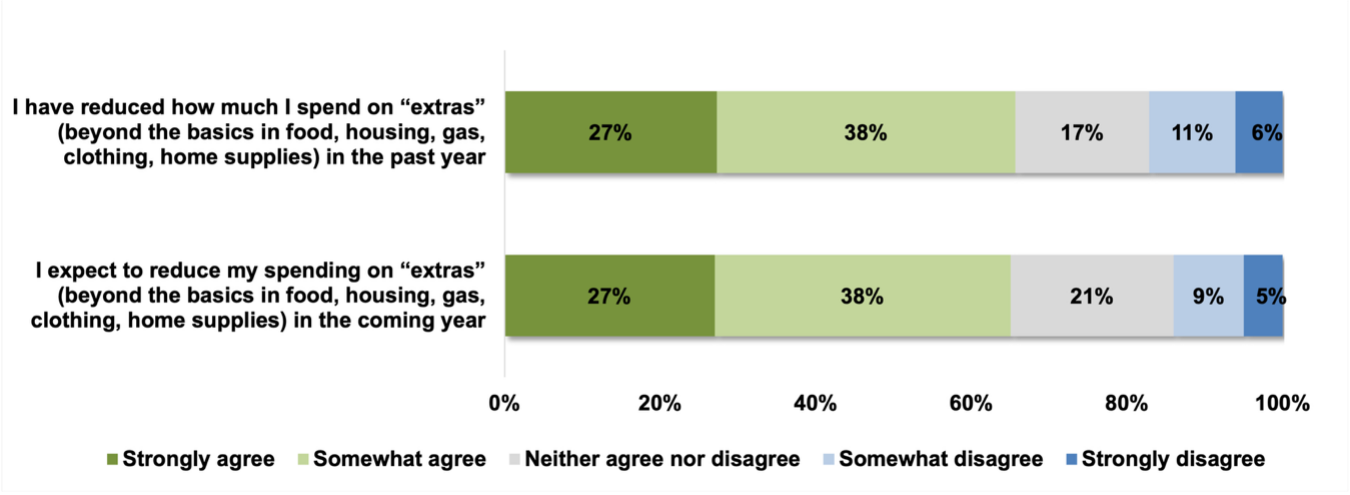
Still, challenges remain. Consumers who have been battling economic stressors for several years at this point have been strained to their limits. Reflecting the current economic situation, Packaged Facts’ survey results from December 2025 indicate that 65% of pet owners reduced how much they spent on “extras” in the past year, with the same share indicating that they would continue to do so in the coming year. Because some pet supplements could be viewed as discretionary by many pet owners, these products are vulnerable to this kind of cost trimming. Additionally, because dogs account for such a large share of sales in this market, a decline in the dog population has had an outsized impact on supplement spending. And supplements continue to compete with functional pet foods and treats along condition-specific lines, another uphill battle.
As a result, after several years of explosive growth, pet supplement sales growth fell to under 5% in 2024 and under 3% in 2025, to reach $2.9 billion. Looking forward, Packaged Facts projects that pet supplement sales will continue to experience gains in line with those of recent years. Packaged Facts expects sales growth in the 2%-3% range in the coming years, in large part due to economic conditions and sales growth no longer being artificially heightened by inflation, and in part due to minimal growth in the dog population.
That said, this market remains full of opportunities, including preventive health supplements, cat-focused products, and omnimarket strategies. Packaged Facts’ fully updated Pet Supplements in the US, 11th Edition, takes a deep dive in the pet supplements market, examining these and other opportunities. The report presents historical and projected market sales through 2030 and explores competitive strategies of key players; trends in new product development including condition-specific formulations, lifestage-focused products, feline supplements, and veterinarian-developed products; and retail channel trends. The report also analyzes purchase patterns by channel and supplement type, usage by demographic cohorts, and a range of consumer insights via Packaged Facts’ proprietary Survey of Pet Owners.
Pet Supplements in the US, 11th Edition Report Details
| Current Total Market Size | $2.9 billion |
| Forecast Total Market Growth Rate | 3% CAGR |
| Historical Period | 2020-2025 |
| Forecast Period | 2026-2030 |
| Regions | United States |
| Products | Dog and cat supplements |
| Markets | Pet supplements |
| Point Where Data is Measured | Retail sales |
Leading Companies Driving Trends in the Pet Supplements Market
| Compana Pet Brands | PetIQ |
| FoodScience Corp. | Swedencare |
| H&H Group | Vetnique Labs |
| Native Pet | Vetoquinol |
| Nutramax Laboratories | Virbac |
| PetAg | Zoetis |
| Pet Honesty |
Economy a Hindrance to Purchasing
Economic concerns have impacted pet owners’ spending, especially on discretionary items. Packaged Facts’ survey results from December 2025 indicate that 65% of pet owners reduced how much they spent on “extras” in the past year, with the same share indicating that they would continue to do so in the coming year.
Because some pet supplements could be viewed as discretionary by many pet owners, these products are vulnerable to this kind of cost trimming. This hesitance in spending has impacted the stickiness of even pet care spending, an area that has historically been viewed as “recession-proof”. Packaged Facts’ January 2026 Survey of Pet Owners saw a drop in the share of pet owners whose pet spending had increased for the first time in five years. It’s hardly surprising, then, that the majority of pet supplement purchasers indicated that they are actively seeking out discounts and promotions on pet supplements more than they used to.
Pet Supplements in the US, 11th Edition Report Scope
Pet Supplements in the US, 11th Edition, examines the US market for nutritional supplements for pets – primarily dogs, cats, birds, small mammals, and reptiles, collectively. The term “supplement” as used in this report refers to products sold in traditional supplement forms including pills, tablets, powders, liquids, and sprays. The primary focus is on products for dogs and cats, which account for a large preponderance of US retail sales
- Executive Summary
- Introduction
- Scope of Report
- Report Methodology
- Market Overview
- Pet Supplement Sales Top $2.9 Billion
- Pet Supplement Sales by Channel and Animal Type
- Market Outlook
- Pet Supplements’ Health and Wellness Role Drives Sales Growth
- Table | Agreement with Selected Statements Related to Pet Health Concerns: Pet Owners Overall vs. Pet Supple
- Economy’s Impact on Pet Owner Spending Mindset
- Changes in the US Pet Population
- Pet Supplements Compete with Pet Food on Health and Wellness
- Veterinarians Have Potential to Impact Supplement Purchasers
- Pet Supplement Regulation
- Pet Supplements’ Health and Wellness Role Drives Sales Growth
- Opportunities
- Preventive Wellness Supplements as Daily Health Insurance
- The Budget-Conscious Pet Owner
- Probiotic/Immune Products
- Longevity and Healthy Aging Supplements
- Behavioral Wellness and Anxiety Supplements
- Cat-Specific Supplements
- Omnichannel Marketing
- Getting More Veterinarians on Board
- Science-Based Supplements
- Introduction
- The Market
- Chapter Highlights
- Market Size and Composition
- Pet Supplement Sales Top $2.9 Billion
- Table | US Retail Sales of Pet Supplements, 2020 – 2025 (millions of dollars and percent change)
- Pet Supplement Sales by Channel
- Table | US Retail Sales of Pet Supplements, Vet Sector vs. Retail Sector, 2020 – 2025 (million dollars and p
- Products for Dogs Dominate Pet Supplement Sales
- Pet Supplement Sales Top $2.9 Billion
- Market Outlook
- Pet Supplements’ Health and Wellness Role Drives Sales Growth
- Table | Agreement with Selected Statements Related to Pet Health Concerns: Pet Owners Overall vs. Pet Supple
- Economy’s Impact on Pet Owner Spending Mindset
- Table | Changes in Levels of Pet Care Spending in Last 12 Months, 2022, 2023, 2024, 2025 and 2026 (percent o
- Changes in the US Pet Population
- Table | Dog-Owning Household Population by Generational Cohort, 2020/21-2024/25 (number in thousands)
- Table | Ratio of Puppy to Kitten Households, 2020/21-2024/25 (number in thousands)
- Pets Central to Home Life
- Table | Where Pets Are Typically Kept: Dogs vs. Cats, 2025 (percent of pet owners)
- Pet Supplements Compete with Pet Food on Health and Wellness
- Table | Condition-Specific Pet Supplements, Pet Food, and Pet Treat Purchase Rates, Past 12 Months, 2025 (pe
- Legislation Casts Doubt on Future of CBD Product Sales
- Table | US Retail Sales of Pet CBD Products, 2020 – 2025 and 2030 (million dollars and percent change)
- Veterinarians Have Potential to Impact Supplement Purchasers
- Sources of Pet Care Information Vary by Generation
- Table | Top Sources of Information for Pet Care, by Generation, 2026 (percent and index of pet owners)
- Pet Supplements’ Health and Wellness Role Drives Sales Growth
- Pet Supplement Regulation
- FDA and AAFCO Monitor Pet Supplements
- National Animal Supplement Council
- The AVMA and Pet Supplements
- Market Projection
- Table | Projected Retail Sales of Pet Supplements, 2025 – 2030P (million dollars and percent)
- Marketer and Retail Trends
- Chapter Highlights
- Competitive Overview
- Marketers Rely on Product Positioning to Differentiate Supplements
- Pet Supplement Channel Lines in the Omnimarket Era
- Pet Owner Brand Preference
- Mergers, Acquisitions, and Investments
- Vital Pet Life Makes Inc. 5000 Fastest Growing Businesses List
- Cesar Millan Enters Pet Supplements Space
- Kevin Hart Introduces Hartfelt Line
- Instagram-Famous Dog Inspires Nutrition Line
- Retail Trends
- Internet Ahead of Brick-and-Mortar Use in Pet Supplement Purchasing
- Top Online Marketers and Brands
- Pet Supplements in Pet Specialty Retailers
- Mass-Market and Farm & Feed Channels
- Marketing and New Product Trends
- Chapter Highlights
- Marketing and New Product Trends
- Beyond Condition Specific Supplements
- Overall Health
- Probiotics Linked to More Than Digestive Support
- Supplements Target Longevity
- Lifestage-Specific Supplements
- Table | Purchase Rates of Milk Replacers, Past 12 Months, by Age of Pet, 2025 (percent of dog and cat owners
- Size-Specific Supplements
- Joint Health Supplements
- Allergy/Skin & Coat Supplements
- Calming Aids and Anxiety Support Supplements
- Veterinary and Professional Formulations
- CBD Offers More than Just Anxiety Treatment
- Cat Supplements Offer More Than Hairball Relief
- Consumer Trends
- Chapter Highlights
- Overview of Pet Supplement Purchasing
- Note on Data Sources
- Consumer Purchasing, Buying Habits, and Attitudes
- Dog Owners More Likely to Purchase Supplements
- Human Supplement and Pet Supplement Use Overlap
- Why Pet Owners Don’t Give Their Pets Vitamins/Supplements
- Most Supplement Purchasers Are Confident in Product Quality
- Factors Influencing Pet Supplement Purchases
- Use of the Internet for Pet Supplements
- Pet Supplement Formats
- Monthly Spending on Pet Supplements
- Condition-Specific Pet Supplements
- Table | Conditions for Which Supplements are Currently Used, 2025 (percent of pet supplements purchasers)
- Amazon Top Website for Online Pet Supplement Purchases
- Pet Specialty Top Destination for In-Store Pet Supplement Purchases
- Demographic Trends
- Young Pet Owners, Households with Children Skew High for Pet Supplement Use
- Table | Demographic Indices for Pet Supplement Purchasing, 2025 (index of pet supplement purchasers)
- Young Pet Owners, Households with Children Skew High for Pet Supplement Use
Cat-specific supplements, value formulations, and science-based formulations are some areas of opportunity.
Pet owner economic challenges, changes in dog ownership, and competition from functional foods and treats are some of the main challenges in the pet supplements market.
The pet supplements market reached $2.9 billion in 2025