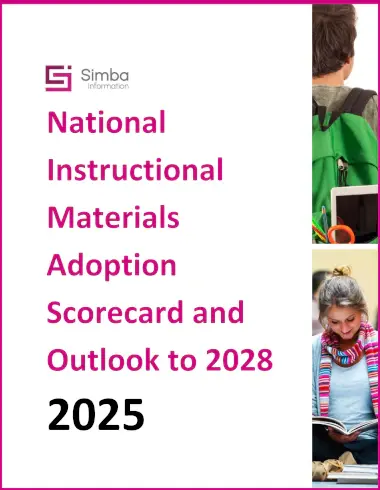
National Instructional Materials Adoption Scorecard and Outlook to 2028 Report
States are reshaping instructional materials decisions through new mandates, updated standards, and expanding subject-area requirements. This report highlights key adoption outcomes and reveals what to expect across major K–12 reviews through 2028.
Free Sample Report
Request a free sample of this report and our team will email it to you.
Report Overview
State Mandates, New Standards, and Expanding Subject Reviews Are Reshaping the K-12 Adoption Landscape
States accelerated updates to literacy, numeracy, science, social studies, civics, and financial literacy standards during the 2022–2023 cycle—raising expectations for alignment and creating new opportunities for materials that meet evolving instructional requirements. The 2024–2028 horizon brings heightened review activity across major adoption states, driven by policy shifts and emerging subject-area mandates.
Key Themes Covered in this Report:
-
New literacy and numeracy mandates are reshaping early-grade expectations, prompting states to require more structured, research-aligned instructional materials.
-
States are expanding subject-area requirements in civics, financial literacy, and CTE, creating fresh opportunities for aligned materials in fast-growing content areas.
-
Updated standards and multi-layered evaluation rubrics are increasing the rigor of adoption reviews, influencing how publishers develop, align, and position their materials.
Key Questions Answered in the Report:
-
How are new state literacy, numeracy, and content mandates reshaping instructional materials requirements and approval decisions?
-
Which subject areas and state reviews are expected to be the most active through 2028, and how will updated standards influence what materials states adopt next?
-
How are states changing their evaluation rubrics, review processes, and alignment expectations, and what do these shifts mean for publishers preparing materials for future cycles?
Overview of the Adoption Landscape
The 2024 National Instructional Materials Adoption Scorecard and Outlook to 2028 examines how state-level instructional materials decisions evolved during the 2022–2023 adoption cycle and identifies the policy forces expected to shape the market through the next several years. States continued to adjust their instructional expectations in response to persistent proficiency gaps in reading and mathematics, prompting new standards, updated frameworks, and expanded review processes. These shifts resulted in an adoption environment defined less by volume and more by structural change, with states placing heightened emphasis on alignment, transparency, and evidence-based decision-making.
State Priorities and Policy Drivers
The report highlights the growing influence of state legislatures on instructional materials reviews. Requirements related to literacy instruction, curriculum transparency, parental oversight, and the definition of “appropriate” content have increasingly shaped evaluation rubrics and approval pathways. Several states introduced new literacy and numeracy initiatives aimed at reversing performance declines, leading to revisions in early reading requirements and expanded expectations for foundational skills. Updates to science, social studies, financial literacy, and career and technical education frameworks also broadened the subject areas under active review.
Results of the 2022–2023 Adoption Year
Adoption activity varied considerably across states. Florida’s high-profile social studies adoption, Texas’ subject-area reviews, and North Carolina’s multi-grade evaluations illustrate the complexity of operating in states with evolving standards and politically visible review processes. Other states, including Alabama and Louisiana, advanced adoption work tied to early literacy and core subject updates. Marketplace outcomes reflected both continuity and change: established publishers retained strong positions in major reviews, while specialized providers found opportunities in emerging subject areas driven by new mandates.
Outlook Through 2028
Looking ahead, adoption activity is expected to remain steady as states prepare for additional standards updates and new subject-area cycles. The 2024–2028 period includes significant upcoming reviews in literacy, mathematics, science, and CTE, as well as expanded activity tied to civics and financial literacy. States continue to refine their evaluation criteria, often adding layers of scrutiny or customization that increase development demands for publishers. As adoption cycles progress, instructional materials providers will need to monitor legislative changes closely and anticipate how shifting state expectations influence content, alignment requirements, and submission schedules.
National Instructional Materials Adoption Scorecard and Outlook to 2028 Report Details
| Historical Period | 2021-2023 adoption years (with prior-cycle context in select states) |
| Forecast Period | 2024-2028 |
| Regions | North America |
| Countries Individually Covered | United States |
| Products | State-approved PreK–12 instructional materials evaluated in adoption cycles, including core programs, supplemental resources, and digital/blended offerings |
| Markets | Statewide adoption states; open-territory district markets; district-level curriculum review processes |
| Materials | Subject areas and adoption structures covered in the report, including reading/ELA, mathematics, science, social studies and civics, financial literacy, and career and technical education (CTE); statewide vs district-level review frameworks |
| Point Where Data is Measured | State-level adoption decisions and outcomes; district evaluation processes in open-territory states |
| Additional Elements | Legislative and policy analysis; state standards and framework updates; 2022–2023 adoption results and scorecard; marketplace participation; 2024–2028 adoption outlook; implications for publisher development and alignment |
Leading Companies Driving Trends in the National PreK-12 Instructional Materials Adoption
| Savvas Learning Company | Cambium Learning Group |
| McGraw Hill | Goodheart-Wilcox |
| Houghton Mifflin Harcourt | |
| Pearson | |
| Cengage | |
| Discovery Education | |
| PowerSchool | |
| Renaissance Learning | |
| Scholastic | |
| Stride |
Instructional Materials Adoption Landscape
The instructional materials adoption environment in the United States continues to evolve as states refine their expectations for curriculum alignment, transparency, and instructional coherence. During the 2022–2023 cycle, updated literacy and numeracy mandates, expanded requirements in civics and financial literacy, and revisions to science and social studies standards shaped the structure of statewide and district-level reviews. These developments signal a more rigorous and policy-driven adoption environment heading into the 2024–2028 period.
States adopting new or revised frameworks increasingly expect publishers to demonstrate alignment not only to standards, but also to state-developed rubrics and mandated content elements. These shifts offer opportunities for programs that meet clarity, evidence-based instructional requirements, and emerging subject-area needs.
State Policy Shifts and Their Influence on Reviews
Legislative activity is playing a larger role in adoption cycles, influencing review timelines, evaluation processes, and the scope of qualifying materials. In several states, new literacy legislation led to revised early-grade expectations that will shape upcoming ELA and foundational reading reviews. Similarly, the expansion of civics and financial literacy requirements has opened new cycles for materials previously reviewed less frequently.
Districts in open-territory states are adopting more structured evaluation processes that mirror statewide criteria, reflecting broader expectations for transparency and alignment.
- Methodology
- Sources
- Executive Summary
- Key Findings
- Market Environment
- Background
- Adoption State Scale
- Adoption State Dynamics
- Top-Down Control Versus Local Autonomy
- Evolving Academic Standards
- Evaluation Processes
- Market Drivers
- The Nation’s Report Card
- Table | NAEP Scores: Reading, Grades 4 and 8, 1992 – 2024
- Table | NAEP Scores: Mathematics, Grades 4 and 8, 1992 – 2024
- Table | NAEP Scores: Science, Grade 8, 2009 – 2024
- State NAEP Scores
- Table | Percent of Fourth-Grade Students Performing At or Above NAEP-Proficient Level, Reading and Math: Ado
- Population Impacts
- The Nation’s Report Card
- Policy and Legislation Trends
- Literacy Policies and Legislation
- Parents’ Rights
- Separation of Church and State
- School Choice Programs Expand
- Adoption States: Education Policy and Legislation
- Alabama
- California
- Florida
- Idaho
- Indiana
- Kentucky
- Louisiana
- Mississippi
- Nevada
- New Mexico
- North Carolina
- Oklahoma
- Oregon
- Rhode Island
- South Carolina
- Tennessee
- Texas
- Utah
- Virginia
- West Virginia
- 2024-2025 Adoption Year Results
- Florida Adopts ELA and Reading Intervention
- Comprehensive Literacy Support
- New Path for ELA
- K-5 ELA and Reading
- Table | Florida K-5 English Language Arts: Adoption List
- Middle School ELA
- Table | Florida Middle School English Language Arts: Adoption List
- Florida High School ELA
- Publisher Performance
- Early Literacy Adoption in Texas
- Literacy
- Student Demographics
- Foundational Language Skills
- Publisher Performance
- Table | Texas K-5 English Language Arts and Reading; Phonics: Adoption List
- Texas Adds Mathematics Curricula
- STAAR Results
- Publishers in Texas Math Bid
- Table | Texas Mathematics: Adoption List
- South Carolina Pivots to Math
- Economic Growth
- Math Proficiency Metrics
- The Palmetto Math Project
- New Instructional Materials
- Table | South Carolina K-12 Mathematics: Adoption List
- Spotlight on Science in Alabama
- Record Education Budget
- The Southern Surge
- New Science Standards
- Review of Science Materials
- Table | Alabama K-12 Science: Adoption List
- Adoption Scorecard 2024
- ELA in Florida and Texas
- Mathematics in South Carolina and Texas
- Alabama Science Adoption
- Publisher Performance: Overall
- Market Insights
- Florida Adopts ELA and Reading Intervention
- The 2025-2026 Adoption Year and Beyond
- Introduction
- California Math Adoption
- The New Math Framework
- Math Proficiency
- An Adoption Gold Rush
- Implementation
- Table | California K-8 Mathematics: Adoption List
- Florida K-12 Mathematics
- Math Proficiency
- Florida Math Bids
- Table | Florida K-12 Mathematics Adoption: Short Bid Report
- Indiana ELA
- Literacy Vision
- Literacy Metrics
- Curriculum Review
- Table | Indiana K-8 Core Reading Advisory List
- Conclusions
- Adoption Outlook
- 2025-2026
- 2026-2027
- 2027-2028
- 2028-2029
- Table | Instructional Materials Adoption Outlook, 2025 – 2028
- Appendix
- Table | Florida High School English Language Arts and Reading: 2024-2025 Adoption List
States continue to revise literacy, numeracy, science, social studies, civics, and financial literacy standards, which has expanded the scope of subject areas entering review during the 2024–2028 period. These updates are reshaping evaluation rubrics, alignment expectations, and the structure of statewide and district-level adoption processes
States are increasing the rigor of their evaluation frameworks, expanding transparency requirements, and adding new content criteria tied to legislation. While this raises development demands for publishers, it also creates opportunities for programs that offer clear alignment, strong instructional coherence, and support for emerging subject-area mandates.
Based on documented state review schedules and standards updates, major activity is expected in reading/ELA, mathematics, science, social studies and civics, financial literacy, and CTE. The timing of these state-led reviews will influence publisher development cycles and market opportunities