Clamshells in Retail Food Packaging
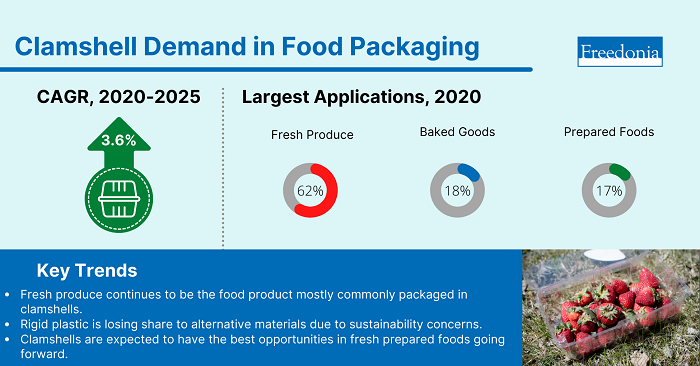
Demand for clamshell packaging is forecast to increase 3.6% per year to $1.6 billion in 2025.
Free Sample Report
Request a free sample of this report and our team will email it to you.
Report Overview
Featuring 14 tables and 20 figures – now available in Excel and Powerpoint! Learn More
Demand for clamshell packaging is forecast to increase 3.6% per year to $1.6 billion in 2025. Gains will be strong in nearly every category, supported by:
- the capacity for clamshell packaging to display its contents, allowing consumers to quickly check for freshness and variety
- the resealability of clamshell packaging, preserving the freshness of its contents
- clamshell packaging’s structural strength, which helps prevent bruising, crushing, crumbling, and smearing
- the stackability of clamshells – folded or otherwise – allowing for both ease of shipping and retail display
- the development of new applications where the benefits of clamshells provide product differentiation and ease of use
Historical Market Trends
Yearly shifts in clamshell packaging demand are determined by a number of factors, primarily those related to production of and demand for their relevant applications. These, in turn, are influenced by:
- population growth
- levels of disposable income and consumer spending on items such as produce and baked goods
- consumer food preferences, such as demand for enhanced convenience or organic products
Use of clamshells grew quickly prior to 2015 alongside strong fresh produce sales and increasing market penetration of the packaging. However, production of berries – the largest market for clamshells – declined through 2019, dragging down overall market gains despite healthy growth in other, smaller categories. Demand for most food items packaged in clamshells grew strongly in 2020 as the COVID-19 pandemic increased at-home food consumption, especially of prepared and comfort foods.
Materials Trends
Demand by Material
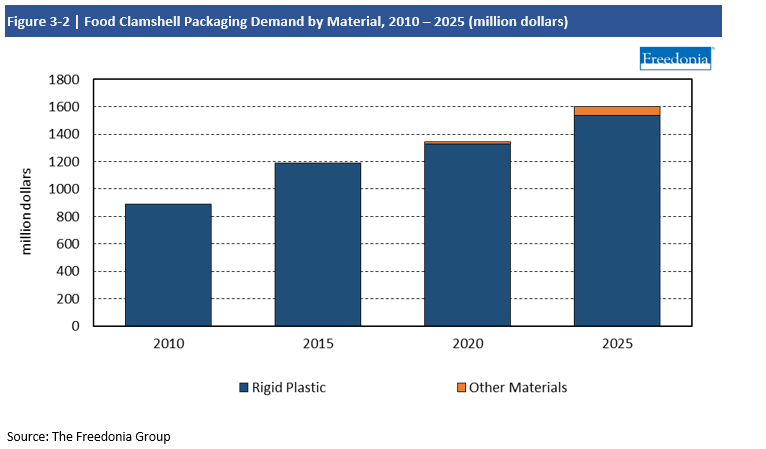
Historically, clamshell packaging used in retail food sales has been the domain of rigid plastic due to its structural integrity and transparency, important attributes in applications such as fresh produce, baked goods, and prepared food. Consumers often choose these items based on appearance and freshness, so the ability to inspect them is invaluable.
However, recent years have seen alternative materials (such as paperboard) and molded fiber products (such as sugarcane) come to the market, especially in Europe. While relatively new in the US, clamshells made from these materials offer numerous sustainability benefits like recyclability and compostability. Molded pulp is made from post-consumer products, further boosting its eco-friendly profile.
Even more recently, molded sugarcane – also known as bagasse – has been championed as a sustainable alternative to rigid plastic packaging, including clamshells. Besides being recyclable and compostable, molded sugarcane packaging is made from the waste created during sugar extraction, making it a prime candidate for innovation by companies looking toward a sustainable future.
Molded pulp and sugarcane also offer performance improvements over rigid plastic, such as increasing the shelf life of produce.
Suppliers of plastic clamshells continue to focus on sustainability, too:
- Many manufacturers’ clamshells use post-consumer PET and are, in turn, recyclable, closing the loop on plastic production.
- Produce packaging suppliers are increasingly utilizing biobased and/or biodegradable plastic materials to enhance their sustainability profile.
- Over 20 fresh berry suppliers made a joint pledge in 2020 to have all plastic packaging be reusable, recyclable, or compostable by 2025.
Demand by Application
Fresh produce is the largest application for clamshell packaging since the ability to inspect produce for freshness and damage is vital to consumers. Furthermore, the performance features of clamshell packaging, such as holes, allow for breathability and drainage, increasing the shelf life of produce.
Baked goods and fresh prepared foods remain relatively significant applications for clamshell packaging, though, as the ability to easily examine food products in-store and reseal them for freshness is essential to consumers. Additionally, the versatility of clamshells allows retailers to use only a few sizes to meet various packaging needs.
Fresh (perishable) prepared foods will continue to be the fastest growing application for clamshell packaging, largely due to continued above average sales growth for them in grocery store deli/foodservice departments. Factors promoting use of clamshells in these applications include:
- Perishable prepared foods are often positioned as an alternative to shelf stable, frozen, and other preserved foods; they are meant to be eaten immediately, reducing the importance of air-tight seals.
- The transparency of clamshell packaging allows consumers to quickly see the freshness and appearance of the food.
This study examines the US market for clamshell packaging for food. A clamshell is a one-piece container consisting of two parts joined together by a hinge. Clamshells snap shut or have a tamper-indicating peel-off tab but are often also taped shut using a label from the manufacturer or retailer.
This study covers only retail usage of clamshell packaging. Clamshells used for foodservice, such as those used in fast-food and other restaurant takeout applications, are not included. Furthermore, only clamshells for packaged food are included; clamshells used for self-serve applications in retail locations are excluded from this study, as are egg cartons.
For the purposes of this study, molded fiber refers to any fibrous material composed of waste paper or other natural fibers, including molded pulp and molded sugarcane.
Clamshells for food are generally made of rigid plastic but may also be made of paperboard, molded pulp, or molded sugarcane. Clamshells are used to package:
- fresh produce, including fruits and salad
- baked goods, such as cakes, cookies, and pastries
- snacks, such as dried fruit, nuts, and trail mix
- fresh prepared foods, such as sandwiches and salads
- other foods, such as savory snacks and chocolate
With fresh produce, clamshells frequently have holes for ventilation and drainage.
This study only covers retail usage of clamshell packaging. Clamshells used for foodservice, such as those used in fast-food and other restaurant takeout applications, are not included. Furthermore, only clamshells for packaged food are included; clamshells used for self-serve applications in retail locations are excluded from this study.
Historical data (2010, 2015, and 2020) and forecasts for 2025 and 2030 are presented for demand for clamshell packaging by value in current dollars (including inflation); demand data by market is presented in current dollars. “Demand” (or sales) is defined as all shipments from US plants, plus imports minus exports.
Demand for clamshell food packaging is projected to grow 3.6% per year to $1.6 billion in 2025, supported by healthy growth in fresh prepared food sales and the importance of clamshells in packaging fragile items like berries, tomatoes, and cookies.
Clamshells offer a variety of advantages in retail food packaging, including:
- high visibility, which allows consumers to check for freshness and variety
- resealability, which preserves the freshness of package contents
- structural strength, which prevents bruising, crushing, crumbling, and smearing
Despite these advantages, though, clamshells will face continued competition from other packaging types, especially two-piece plastic containers and pouches.
Fresh Produce to Remain the Largest Application of Clamshell Packaging
Fresh produce comprises over 60% of clamshell packaging use for food; they offer many benefits in this application, including transparency, crush resistance, proper air circulation, and drainage. These characteristics are especially important to fresh berries, for which clamshells are the dominant form of packaging.
Plastic Expected to Lose Share to Alternative Materials Due to Sustainability Concerns
Historically, clamshell packaging for retail food has been comprised almost entirely of rigid plastic. While the vast majority of clamshell packaging will continue to be made of plastic, due in part to the importance of high visibility in key applications, sustainability concerns are expected to spur the use of other materials. The most notable of these materials include paperboard and sugarcane, as they are biodegradable, compostable, and offer a more natural image.
In response to ongoing sustainability initiatives, producers of plastic clamshells are expected to use more recycled content and pursue the development of clamshells made with bioplastics.
Fresh Prepared Foods to be the Fastest Growth Market for Clamshell Packaging
Clamshells continue to be a popular option for the packaging of fresh entrées, salads, sandwiches, and other perishable prepared foods; above average growth in retail sales of fresh prepared foods will continue to drive demand. Clamshells are one of the few types of packaging to offer both high visibility and crush resistance – key advantages for “grab and go” foods where appearance and convenience play key roles in purchase decisions.

Historical Market Trends
Yearly shifts in clamshell packaging demand are determined by a number of factors, primarily those related to production of and demand for their relevant applications. These, in turn, are influenced by:
- population growth
- levels of disposable income and consumer spending on items such as produce and baked goods
- consumer food preferences, such as demand for enhanced convenience or organic products
Use of clamshells grew quickly prior to 2015 alongside strong fresh produce sales and increasing market penetration of the packaging. However, production of berries – the largest market for clamshells – declined through 2019, dragging down overall market gains despite healthy growth in other, smaller categories. Demand for most food items packaged in clamshells grew strongly in 2020 as the COVID-19 pandemic increased at-home food consumption, especially of prepared and comfort foods.
Materials Trends
Demand by Material
Historically, clamshell packaging used in retail food sales has been the domain of rigid plastic due to its structural integrity and transparency, important attributes in applications such as fresh produce, baked goods, and prepared food. Consumers often choose these items based on appearance and freshness, so the ability to inspect them is invaluable.
However, recent years have seen alternative materials (such as paperboard) and molded fiber products (such as sugarcane) come to the market, especially in Europe. While relatively new in the US, clamshells made from these materials offer numerous sustainability benefits like recyclability and compostability. Molded pulp is made from post-consumer products, further boosting its eco-friendly profile.
Even more recently, molded sugarcane – also known as bagasse – has been championed as a sustainable alternative to rigid plastic packaging, including clamshells. Besides being recyclable and compostable, molded sugarcane packaging is made from the waste created during sugar extraction, making it a prime candidate for innovation by companies looking toward a sustainable future.
Molded pulp and sugarcane also offer performance improvements over rigid plastic, such as increasing the shelf life of produce.
Suppliers of plastic clamshells continue to focus on sustainability, too:
- Many manufacturers’ clamshells use post-consumer PET and are, in turn, recyclable, closing the loop on plastic production.
- Produce packaging suppliers are increasingly utilizing biobased and/or biodegradable plastic materials to enhance their sustainability profile.
- Over 20 fresh berry suppliers made a joint pledge in 2020 to have all plastic packaging be reusable, recyclable, or compostable by 2025.

Demand by Application
Fresh produce is the largest application for clamshell packaging since the ability to inspect produce for freshness and damage is vital to consumers. Furthermore, the performance features of clamshell packaging, such as holes, allow for breathability and drainage, increasing the shelf life of produce.
Baked goods and fresh prepared foods remain relatively significant applications for clamshell packaging, though, as the ability to easily examine food products in-store and reseal them for freshness is essential to consumers. Additionally, the versatility of clamshells allows retailers to use only a few sizes to meet various packaging needs.
Fresh (perishable) prepared foods will continue to be the fastest growing application for clamshell packaging, largely due to continued above average sales growth for them in grocery store deli/foodservice departments. Factors promoting use of clamshells in these applications include:
- Perishable prepared foods are often positioned as an alternative to shelf stable, frozen, and other preserved foods; they are meant to be eaten immediately, reducing the importance of air-tight seals.
- The transparency of clamshell packaging allows consumers to quickly see the freshness and appearance of the food.
This study examines the US market for clamshell packaging for food. A clamshell is a one-piece container consisting of two parts joined together by a hinge. Clamshells snap shut or have a tamper-indicating peel-off tab but are often also taped shut using a label from the manufacturer or retailer.
This study covers only retail usage of clamshell packaging. Clamshells used for foodservice, such as those used in fast-food and other restaurant takeout applications, are not included. Furthermore, only clamshells for packaged food are included; clamshells used for self-serve applications in retail locations are excluded from this study, as are egg cartons.
For the purposes of this study, molded fiber refers to any fibrous material composed of waste paper or other natural fibers, including molded pulp and molded sugarcane.
Clamshells for food are generally made of rigid plastic but may also be made of paperboard, molded pulp, or molded sugarcane. Clamshells are used to package:
- fresh produce, including fruits and salad
- baked goods, such as cakes, cookies, and pastries
- snacks, such as dried fruit, nuts, and trail mix
- fresh prepared foods, such as sandwiches and salads
- other foods, such as savory snacks and chocolate
With fresh produce, clamshells frequently have holes for ventilation and drainage.
This study only covers retail usage of clamshell packaging. Clamshells used for foodservice, such as those used in fast-food and other restaurant takeout applications, are not included. Furthermore, only clamshells for packaged food are included; clamshells used for self-serve applications in retail locations are excluded from this study.
Historical data (2010, 2015, and 2020) and forecasts for 2025 and 2030 are presented for demand for clamshell packaging by value in current dollars (including inflation); demand data by market is presented in current dollars. “Demand” (or sales) is defined as all shipments from US plants, plus imports minus exports.
Demand for clamshell food packaging is projected to grow 3.6% per year to $1.6 billion in 2025, supported by healthy growth in fresh prepared food sales and the importance of clamshells in packaging fragile items like berries, tomatoes, and cookies.
Clamshells offer a variety of advantages in retail food packaging, including:
- high visibility, which allows consumers to check for freshness and variety
- resealability, which preserves the freshness of package contents
- structural strength, which prevents bruising, crushing, crumbling, and smearing
Despite these advantages, though, clamshells will face continued competition from other packaging types, especially two-piece plastic containers and pouches.
Fresh Produce to Remain the Largest Application of Clamshell Packaging
Fresh produce comprises over 60% of clamshell packaging use for food; they offer many benefits in this application, including transparency, crush resistance, proper air circulation, and drainage. These characteristics are especially important to fresh berries, for which clamshells are the dominant form of packaging.
Plastic Expected to Lose Share to Alternative Materials Due to Sustainability Concerns
Historically, clamshell packaging for retail food has been comprised almost entirely of rigid plastic. While the vast majority of clamshell packaging will continue to be made of plastic, due in part to the importance of high visibility in key applications, sustainability concerns are expected to spur the use of other materials. The most notable of these materials include paperboard and sugarcane, as they are biodegradable, compostable, and offer a more natural image.
In response to ongoing sustainability initiatives, producers of plastic clamshells are expected to use more recycled content and pursue the development of clamshells made with bioplastics.
Fresh Prepared Foods to be the Fastest Growth Market for Clamshell Packaging
Clamshells continue to be a popular option for the packaging of fresh entrées, salads, sandwiches, and other perishable prepared foods; above average growth in retail sales of fresh prepared foods will continue to drive demand. Clamshells are one of the few types of packaging to offer both high visibility and crush resistance – key advantages for “grab and go” foods where appearance and convenience play key roles in purchase decisions.
- Executive Summary
- Figure 1-1 | Clamshell Demand in Food Packaging
- About This Report
- Report Details
- Study Scope & Product Description
- Figure 2-1 | Clamshell Packaging: Product Examples
- Impact of COVID-19 Pandemic
- Table | Annual Food Clamshell Packaging Demand by Application, 2019 - 2021
- Figure 2-2 | Annual Clamshell Food Packaging Demand, 2018 - 2022
- Overview
- Historical Market Trends
- Table | Food Clamshell Packaging Demand, 2010 - 2020
- Figure 3-1 | Food Clamshell Packaging Demand, 2000 - 2020
- Materials Trends
- Demand by Material
- Table | Food Clamshell Packaging Demand by Material, 2010 - 2025
- Figure 3-2 | Food Clamshell Packaging Demand by Material, 2010 - 2025
- Plastic Clamshell Resins
- Table | Plastic Clamshell Demand by Resin, 2010 - 2025
- Demand by Material
- Factors Impacting Clamshell Packaging Demand
- Product Innovation
- Figure 3-3 | Clamshell Packaging Innovation: Product Examples
- Sustainability
- Product Innovation
- Historical Market Trends
- Applications
- Demand by Application
- Table | Food Clamshell Packaging Demand by Application, 2010 - 2025
- Figure 4-1 | Food Clamshell Packaging Demand by Application, 2010 - 2025
- Fresh Produce
- Demand by Application
- Figure 4-2 | Fresh Produce Clamshell Packaging: Product Examples
- Table | Fresh Produce Clamshell Demand by Application, 2010 - 2025
- Figure 4-3 | Fresh Produce Clamshell Packaging Demand by Application, 2010 - 2025
- Berries
- Figure 4-4 | Berry Clamshell Packaging: Product Examples
- Figure 4-5 | Berry Clamshell Demand, 2010 - 2025
- Figure 4-6 | Berry Production in the US, 2010 - 2025
- Tomatoes
- Figure 4-7 | Tomato Clamshell Packaging: Product Examples
- Figure 4-8 | Tomato Clamshell Demand, 2010 - 2025
- Demand by Application
- Baked Goods
- Figure 4-9 | Baked Goods Clamshell Packaging: Product Examples
- Table | Baked Goods Clamshell Packaging Demand by Application, 2010 - 2025
- Figure 4-10 | Baked Goods Clamshell Packaging Demand by Application, 2010 - 2025
- Fresh Prepared Foods
- Figure 4-11 | Fresh Prepared Foods Clamshell Packaging: Product Examples
- Table | Fresh Prepared Foods Clamshell Packaging Demand by Application, 2010 - 2025
- Figure 4-12 | Fresh Prepared Foods Clamshell Packaging Demand by Application, 2010 - 2025
- Other Foods
- Figure 4-13 | Other Foods Clamshell Packaging Demand, 2010 - 2025
- Demand by Application
- Key Suppliers & Industry Trends
- Industry Composition
- Industry Leaders
- Figure 5-1 | IP's Paper Clamshell Packaging
- Appendix
- Scope
- Table | Relevant Industry Codes
- Table | Relevant HS Codes
- Definitions
- Freedonia Methodology
- Study-Specific Methodology
- Sources
- Associations & Agencies
- Related Studies & Reports
- Macroeconomic Assumptions
- Economic Environment
- Table | Macroeconomic Indicators, 2010 - 2025
- Demographics
- Table | Population & Households, 2010 - 2025
- Consumer Spending
- Table | Personal Consumption Expenditures & Retail Sales, 2010 - 2025
- Retail Sales
- Table | Nondurable Goods Retail Sales, 2010 - 2025
- Economic Environment
- Scope
Fresh prepared food is the fastest growth market for clamshell packaging.
Fresh produce continues to be the largest application for clamshells.
Clamshell food packaging for retail use is projected to grow 3.8% per year through 2025.