Frozen Food Boxes & Cartons
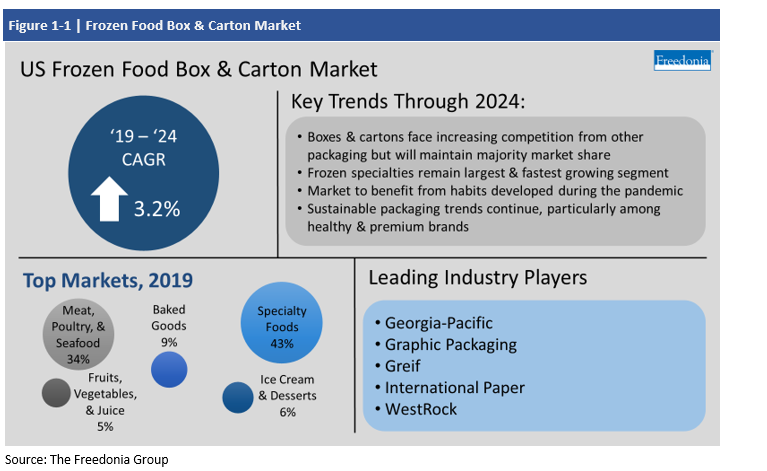
Frozen food box and carton demand is projected to grow 3.2% annually to $3.1 billion in 2024.
Free Sample Report
Request a free sample of this report and our team will email it to you.
Report Overview
Featuring 21 tables and 23 figures – now available in Excel and Powerpoint! Learn More
 This study analyzes the market for frozen food boxes and cartons. Historical (2009, 2014 and 2019) data and forecasts to 2024 are presented in current dollars.
Demand by Type
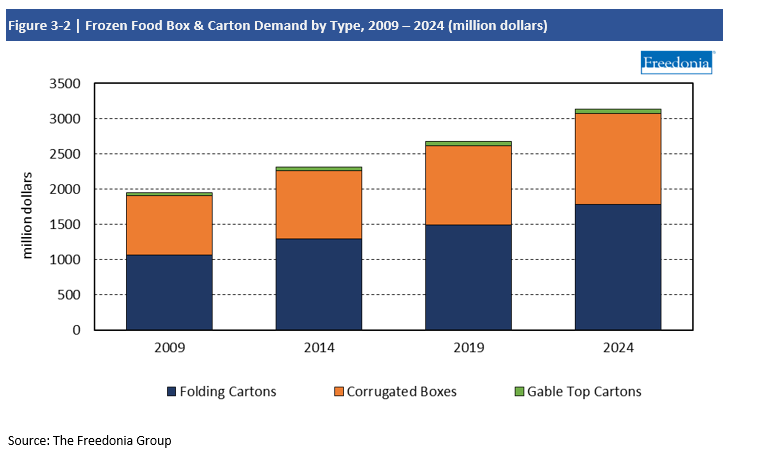
Demand for boxes and cartons used to package frozen food is projected to increase 3.2% per year to $3.1 billion in 2024, supported by such factors as:
- heightened demand for boxes with value-added features such as microwave susceptors, which facilitate browning of pizza, French fries, sandwiches, and other products for which crispness is desirable
- the increasing use of higher quality graphics, which are a means for brand owners to convey a premium image for their products
- the favorable characteristics of boxes, including their stackability and good product protection
Folding cartons accounted for the largest share of box and carton demand in frozen food applications, with 56% of sales in 2019.
Folding cartons are expected to see the strongest advances due to:
- their extensive use with frozen specialty foods and ice cream novelties
- expanding use of higher value graphics on these cartons
- the widespread use of these products with frozen dinners, especially those packaged in bowls instead of trays
Pricing Trends
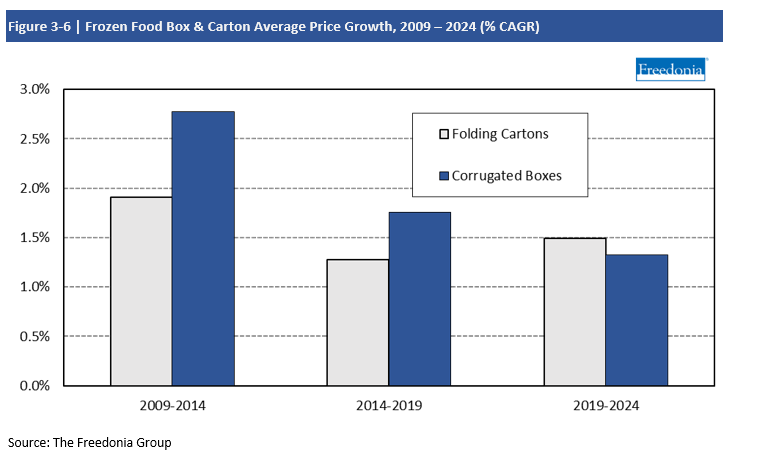
Price competition in frozen food boxes and cartons is intense between vendors of comparable products because many of these packaging types are low technology commodities.
Other considerations with an influence on pricing include design costs, shipping and filling costs, and the degree of customization required. Costs associated with labor, equipment, and environmental compliance are also key factors.
Average prices for frozen food boxes and cartons in 2019 ranged from about 13 cents per unit for folding cartons to 91 cents per unit for corrugated boxes – a wide range due to the diversity of product types and differences in graphic quality, size, and performance requirements.
Overall growth in average box and carton prices going forward will be influenced by several factors, including:
- expanding use of recycled content in packaging, which can increase raw material costs
- increased use of high-quality graphics and higher value packaging with improved barrier technologies
Competitive Products
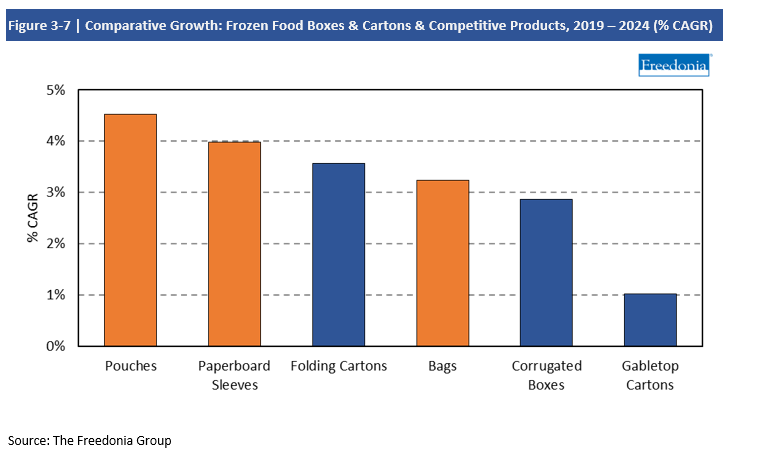
Boxes and cartons compete with other packaging types that are lighter in weight. They face particular competition from:
- bags, which are increasingly being used in the frozen meat, poultry, and seafood section due to their increased sustainability and cost effectiveness
- paperboard sleeves, which are increasingly used by frozen food manufacturers as they weigh less than folding cartons
- pouches, which have been seeing increased used in almost every market segment:
- For instance, stand-up pouches are increasingly used for frozen fruits and vegetables, meat and seafood products, and dessert snacks.
- Additionally, pouches could benefit from the ongoing shift to e-commerce among grocery shoppers as they are light weight and amenable to shipping.
Flexible packaging demand growth will also be driven by performance improvements such as self-venting films and consumer convenience features (e.g., resealable pouches).
Boxes and carton product segments covered include:
- folding cartons – also known as folding paperboard boxes
- corrugated boxes
- gable top cartons
Corrugated boxes used as primary packaging are included; however, corrugated boxes for secondary packaging with case quantities are excluded, as are shipping containers and retail-ready packaging.
Applications covered include:
- frozen specialty foods:
- appetizers
- breakfast foods such as waffles, pancakes, French toast, and toaster pstries
- breakfast sandwiches
- entrées
- frozen dinners
- hand-held entrées
- plant-based meat alternative products
- pizzas such as pizza pies, slices, flatbreads, pizza pockets, and pizza rolls,
- side dishes
- soups
- whipped toppings
- meat, poultry, and seafood, including fresh, unprepared item as well as further processed types, such as breaded poultry and seafood:
- meat (including beef and veal, pork, and lamb) as well as meat products marketed as breakfast meats
- poultry (chicken, turkey, and other products such as goose and duck)
- seafood (all fish and shellfish)
- frozen baked goods, including:
- bagels
- biscuits
- bread rolls and loaves
- cakes, cheesecakes, and cake bites
- cheese and sweet rolls
- cinnamon rolls
- cookies and brownies
- dough and batters (cookie, pastry, filo)
- eclairs and other pastries
- flan, custard, crème brûlée
- muffins
- pie and pizza crusts
- pies
- rolls
- tarts
- tortillas
- fruit, vegetables, and juice:
- plain vegetables and fruit products
- prepared frozen vegetables, such as breaded onion rings, mushrooms and eggplant, veggie pastas, and mashed cauliflower
- juice concentrates – including 100% juice concentrates and juice drink concentrates (e.g., lemonade and fruit punch)
- French fries, which are considered a potato product
- ice cream and other frozen desserts:
- hard and soft ice cream
- hard and soft frozen yogurt
- sherbet
- sorbet
- gelato
- other frozen foods, including (e.g., sauces, baby food, pet food, cocktail mixers, nondairy creamers, liquid eggs, herbs, drink mixes)
- frozen custard
- flavored ices
- ice cream cakes
- ice cream novelties (i.e., single-serve units of any of the above)
For the purposes of this study, entrées are distinguished from dinners in that they do not generally contain a complete meal. Excluded from this segment are hand-held entrées, which are included in the Other Frozen Specialties segment.
Excluded from the scope of this study are:
- packaged ice
- frozen carryout
- meal delivery program foods
- shelf-stable products that are frozen after purchase
Frozen food box and carton demand is projected to grow 3.2% annually to $3.1 billion in 2024, supported by:
- heightened demand for boxes and cartons with value-added features
- the increasing use of higher quality graphics, which are a means for brand owners to convey a premium image for their products
- an increased willingness on the part of consumers to purchase frozen foods as a result of the pandemic
- the favorable characteristics of boxes, including their stackability and good product protection
- the popularity of frozen foods in formats such as bowls, which generally require an outer carton
Despite Competition from Other Packaging, Boxes & Cartons Maintain Majority Market Share
Boxes and cartons face particular competition from bags, sleeves, and pouches in the frozen food market due to sustainability concerns and cost pressures:
- Bags and pouches are seeing increased use in the frozen meat, poultry, and seafood segment due to their cost effectiveness and lighter weight, which reduces energy requirements for shipping.
- Frozen food manufacturers have increasingly adopted paperboard sleeves at the expense of folding cartons due to their lighter weight.
Box manufacturers are responding to competition by recycling more, increasing the use of recycled content, and decreasing product weight.
Despite competition from alternatives, boxes and cartons will remain the largest segment of frozen food packaging due to the positive image of paper and the popularity of frozen dinners, which are predominantly packaged in cartons.
Frozen Specialties Remain the Largest & Fastest Growing Segment for Boxes & Cartons
Frozen specialties – such as dinners, pizza, and breakfast foods – account for 43% of frozen food box and carton demand and this product category is expected to see the fastest growth of any market segment for boxes and cartons. Demand for frozen dinners – the largest segment of specialties – is predicted to experience particularly fast growth due to consumer demand for increased convenience in home meal preparation. Other factors driving growth are the improved quality of frozen dinners – specifically a wider range of healthy and clean-label options that appeal to millennials and younger consumers – and growth in older age groups and single-person households, which are more intensive consumers of single-serving and portioned dinners.
Box & Carton Growth Remains Strong Through COVID-19 Pandemic
Though many industries faced slow growth or even declined in 2020, the frozen food box and carton market posted healthy advances as consumers increased their reliance on at-home cooking. Additionally, the pandemic prompted consumers to stockpile nonperishable foods, including frozen foods. These habits persist as consumers have become accustomed to the convenience of frozen foods and aware of expanded frozen food offerings.
- Executive Summary
- About This Report
- Report Details
- Study Scope & Product Description
- Impact of COVID-19 Pandemic
- Overview
- Historical Market Trends
- Demand by Type
- Folding Cartons
- Corrugated Boxes
- Gable Top Cartons
- Pricing Trends
- Competitive Products
- Sustainability Initiatives
- Recycling & Recycled Content
- Source Reduction (Weight Reduction)
- Applications
- Demand by Application
- Frozen Specialty Foods
- Frozen Meat, Poultry, & Seafood
- Frozen Baked Goods
- Ice Cream & Frozen Desserts
- Frozen Fruits, Vegetables, & Juice
- Other Frozen Foods
- Key Suppliers & Market Share
- Industry Composition
- Market Share
- Mergers & Acquisitions
- Appendix
- Scope
- Definitions
- Freedonia Methodology
- Study-Specific Methodology
- Sources
- Associations & Agencies
- Related Studies & Reports
- Macroeconomic Assumptions
- Economic Environment
- Demographics
- Consumer Spending
Demand for corrugated boxes used in frozen food packaging is forecast to climb 2.9% annually to $1.3 billion in 2024.
Frozen food box and carton demand is projected to grow 3.2% annually to $3.1 billion in 2024.
Folding cartons accounted for the largest share of box and carton demand in frozen food applications, with 56% of sales in 2019.