





Industry Reports
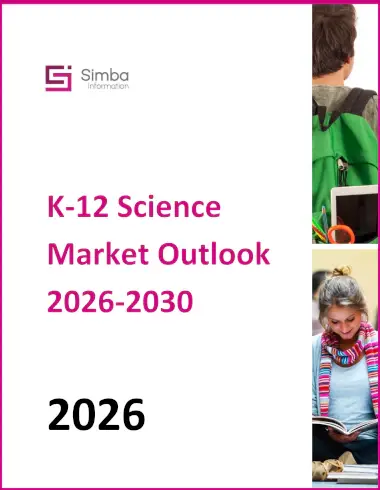
K-12 Science Market Outlook 2026-2030 Report
The US K-12 science market is a blended instructional system in which curriculum, digital tools, hands-on materials, and implementation support increasingly move together. This report examines the replacement cycles, state timing, classroom-use patterns, and competitive positions shaping purchasing and implementation through 2030.
Free Sample Report
Request a free sample of this report and our team will email it to you.
Report Overview
Instructional Need Is Clear: Market Growth Depends on Conversion and Implementation.
Instructional need does not translate automatically into sales. Simba’s 2026-2030 outlook examines how replacement timing, state and district purchasing, digital renewals, physical-material replenishment, budgets, and implementation capacity affect market conversion.
Key Themes Covered in this Report:
- Replacement timing among K-8 districts using 2018-2020-era materials, alongside upcoming Florida and Texas science-market cycles.
- A blended market in which core curriculum, digital tools, hands-on materials, OER-related services, assessment, and implementation support are bundled and purchased through multiple models.
- How teacher capacity, materials modification, and lifecycle costs affect implementation, renewal, and replenishment.
- Executive Summary
- Market Structure
- Demand and Implementation
- Standards and State Market Timing
- Competitive Outlook
- Principal Opportunities and Risks
- Interpretation
- Methodology
- Historical and Current Market Periods
- Science Market Estimation Approach
- Forecast Development
- Evidence Source and Verification
- Evidence Hierarchy
- Contract and Revenue Treatment
- Data Conventions and Limitations
- Market Size, Structure, and Forecast
- Current Market Context and Science-Market Estimate
- Table | PreK-12 Instructional-Materials Market and Modeled K-12 Science Market, 2024-2028 (million dollars)
- Historical Science-Market Benchmark
- Table | Selected Historical K-12 Science-Market Indicators, 2021-2022 School Year (million dollars)
- Elementary Grades Represented the Largest Portion of Sales
- Table | K–12 Science Instructional-Materials Sales by Grade Band, 2020 – 2021 and 2021 – 2022 (million dolla
- Supplemental Materials Accounted for the Majority of the Historical Market
- Table | K–12 Science Instructional-Materials Sales: Core and Supplemental, 2020 – 2021 and 2021 – 2022 (mill
- Digital Materials Led Sales, but Science Remained a Blended Market
- Table | K–12 Science Instructional-Materials Sales by Format, 2020 – 2021 and 2021 – 2022 (million dollars)
- Historical Structure Establishes the Baseline, Not the Current Market
- Current Market Structure
- Table | Current K–12 Science Instructional-Materials Market Structure
- Current Format Context
- Current Curriculum Supply and Replacement Signals
- Grade-Band and Course Structure
- Table | Public-School Enrollment by K-12 Grade Band, Fall 2024 (thousand students)
- Forecast Through 2030
- Current State and Replacement-Cycle Evidence
- Table | Selected Current and Upcoming State Science-Materials Signals Relevant to the Forecast
- Scenario Framework for 2029-2030
- Table | Central Sensitivity Scenario for the K-12 Science Market, 2024 – 2030 (million dollars)
- Forecast Range
- Table | K-12 Science Market Scenario Range, 2028 – 2030 (million dollars)
- Adoption Cycles Contribute to Year-to-Year Variation
- Current State and Replacement-Cycle Evidence
- Current Market Context and Science-Market Estimate
- Demand and Operating Environment
- Science Achievement and Instructional Need
- Eighth-Grade Science Performance Declined From 2019
- Table | Selected Grade 8 NAEP Science Indicators, 2019 and 2024
- Declines Extended Across the Science Content Areas
- Inquiry, Interest, and Confidence Also Weakened
- Resource Availability Was Uneven
- TIMSS Provides a More Stable International Comparison
- Table | US Science Performance in TIMSS 2023
- Implications for Instructional-Materials Demand
- Eighth-Grade Science Performance Declined From 2019
- Enrollment and Demographic Trends
- Table | Public-School Enrollment by Science-Market Grade Band, 2024 Actual and 2031 projection (students in
- Enrollment Decline Creates a Unit-Volume Constraint
- State Trends Are More Important Than the National Average
- Student Composition Is Changing as Enrollment Declines
- English Learners Represent a Large and Regionally Concentrated Market Need
- The Population Served Under IDEA Is Increasing
- Enrollment Decline and Greater Complexity Will Operate Together
- Table | Competing Market Pressures
- Instructional Time and Subject Prioritization
- Science Competes for Time Within the Elementary School Day
- Integration Can Protect Science Time, but It Must Preserve Science Learning
- Inquiry Requires More Than a Short Content Block
- Teacher Planning Time Is Part of the Science-Time Constraint
- Secondary Science Has More Protected Time but Greater Course Complexity
- Table | Instructional-Time Constraints and Science-Materials Implications
- Equity and Access
- Advanced Science Courses Are Not Available in Every High School
- Table | Public High Schools Offering Selected Science Courses, 2021 – 2022
- Students With Disabilities Have Lower Participation in Several Science Courses
- Table | Science-Course Enrollment Rates by IDEA Status, 2021 – 2022
- English Learner Participation Varies by Course
- Table | Science-Course Enrollment Rates by English Learner Status, 2021 – 2022
- Access to Advanced Science Remains Uneven by Race and Ethnicity
- Table | Representation in Public High School and AP Science Enrollment, 2021 – 2022
- Rural Schools Face Distinct Access Conditions
- Product Cost and Operational Capacity Shape Equity
- Table | Dimensions of Equitable Science Access
- Advanced Science Courses Are Not Available in Every High School
- Science, STEM, and Workforce Pathways
- Workforce Demand Strengthens the Strategic Importance of Science
- Table | STEM Employment,
- Science and STEM Are Related but Not Identical Markets
- Current Simba Research Identifies Science and STEM as a High-Growth Strategic Area
- CTE Expands the Range of Science-Related Courses
- Table | Treatment of STEM and Workforce Products in the Science Market
- Advanced Coursework Creates a Differentiated Market
- Rural and Regional Workforce Strategies Create Distinct Opportunities
- Federal and Institutional Investment Supports the STEM Education Ecosystem
- Workforce Alignment Can Strengthen Demand but Also Create Scope Risk
- Workforce Demand Strengthens the Strategic Importance of Science
- Science Achievement and Instructional Need
- Standards, Adoptions, and State Market Indicators
- National Science Standards Landscape
- Twenty States and the District of Columbia Have Adopted the NGSS Directly
- Table | National K–12 Science Standards Landscape
- Common Foundations Do Not Create a Single National Curriculum Market
- Standards Alignment Is a Necessary but Incomplete Market Measure
- Standards Revisions Create Potential Replacement Points
- Standards Are a Continuing Market Influence, Not a One-Time Transition
- Twenty States and the District of Columbia Have Adopted the NGSS Directly
- Governance and Instructional-Materials Adoption Models
- Four Governance Models Describe the Current Market
- Table | Principal Instructional-Materials Governance Models
- Florida: State Adoption With District Responsibility
- Texas: State Review Within a Locally Selected Market
- California: State Frameworks, K–8 Adoption, and Local Selection
- New York: State Standards With Local Curriculum Authority
- State Approval Is an Access Point, Not a Revenue Measure
- Governance Systems Are Becoming More Complex, Not Uniformly More Centralized
- Four Governance Models Describe the Current Market
- Recent Science Adoption Activity
- Table | Selected Recent K–12 Science Standards and Materials Cycles
- Texas Proclamation 2024 Created a Broad Science Product List
- Florida Drew 146 K–12 Science Bid Intentions
- Alabama’s Review Differentiated Approved and Rejected Products
- Tennessee Entered Its Implementation Stage in 2025–2026
- Oklahoma Adds a Material 2026 Review Event
- Mississippi Is Already in a 2026-2031 Science Materials Cycle
- Louisiana and Kentucky Represent Different HQIM Signals
- Other Current Lists Extend the Replacement Picture
- Cross-State Findings From the Recent Cycles
- Major-State Indicator Profiles
- Table | Texas and Florida as K–12 Science Market Indicators
- Texas
- Florida
- California
- New York
- Table | New York Science-Market Evidence Structure
- California and New York Provide the Necessary Local-Control Counterweight
- Table | California and New York as Local-Control Market Indicators
- Alabama and Tennessee as Current-Cycle Controls
- Table | Roles of Alabama and Tennessee in the State Research Model
- Alabama
- Tennessee
- Science Adoption and Replacement Pipeline Through 2030
- The Pipeline Contains Both Scheduled State Cycles and Decentralized Replacement Activity
- Table | Selected K–12 Science Materials Pipeline, 2026 – 2030
- 2026 Combines Implementation With New State Review and Purchasing Activity
- 2027 and 2028 Add Florida’s Next Review and Oklahoma’s New Contract Window
- 2029 Marks Florida’s New Contract Period and Texas’ Planned Science Review
- 2030 Combines Florida Continuation, Planned Texas Implementation, and West Virginia’s New-Materials
- The Pipeline Should Be Used as a Timing Framework, Not a Revenue Total
- Table | Rubrics and Forecast Treatments
- The Pipeline Contains Both Scheduled State Cycles and Decentralized Replacement Activity
- National Science Standards Landscape
- Curriculum Supply, Quality, and Classroom Use
- Curriculum Supply and the Science Materials Ecosystem
- The Available Curriculum Is Broader Than the Commercial Core Market
- Table | Principal Source of K–12 Science Curriculum and Materials
- Commercial Comprehensive Programs Remain Important but Do Not Define the Full Supply
- Commercial Supplements Serve Both Planned and Corrective Roles
- Open Curriculum Has Developed a Commercial Support Ecosystem
- District-Developed Curriculum Can Be Both a Substitute and a Purchasing Framework
- Teacher-Created Materials Remain Structurally Important
- Current Supply Is Less Visible Than the Number of Products Suggests
- The Available Curriculum Is Broader Than the Commercial Core Market
- Independent Review, Quality Evidence, and Its Limits
- EdReports Reviews Comprehensive Programs, Not the Entire Science Market
- Science Has Fewer Reviewed and Highly Rated Options
- Table | Interpreting Science Curriculum Review Counts
- Review Tools Have Changed
- Table | EdReports Science Review Generations
- A Green Rating Is Strong Evidence, but Not a Universal Adoption Decision
- Earlier Review Evidence Must Not Be Presented as Current Market Coverage
- State Approval and Independent Review Serve Different Purposes
- Review Transparency Is Uneven
- Independent Review Can Shape the Market Without Determining It
- Classroom Use, Materials Selection, and Modification
- Science Teachers Use a More Decentralized Mix of Main Materials
- Table | Science Teachers’ Regular Use of Off-the-Shelf Main Materials, 2024 – 2025
- Use of Independently Rated Materials Remains Limited
- Table | Regular Use of EdReports Green-Rated Science Materials, 2024 – 2025
- Teachers and School-Level Educators Often Make the Materials Decision
- Adoption, Availability, and Use Must Remain Separate
- Table | Measures of Science Instructional-Materials Presence
- Main-Material Use Has Different Commercial Meanings
- Modification Is a Routine Part of Science Instruction
- Table | Science Teachers Modifying Main Instructional Materials, 2024 – 2025
- Many Teachers Questioned the Adequacy of Their Materials
- Table | Science Teachers’ Perceptions of Materials Adequacy, 2024 – 2025
- Teachers Modify Materials for Engagement, Relevance, Time, and Difficulty
- Modification Can Strengthen or Weaken a Curriculum
- Table | Types of Science-Materials Modification
- Supplementation and Modification Are Related but Distinct
- The Market Opportunity Lies in Supported Adaptability
- Science Teachers Use a More Decentralized Mix of Main Materials
- Implementation Requirements and Classroom Fidelity
- Purchasing a Curriculum Does Not Complete the Adoption
- Coherence Extends Beyond the Curriculum Document
- Implementation Capacity Has Several Dimensions
- Table | Dimensions of Science Curriculum Implementation Capacity
- Professional Learning Must Address the Instructional Shift
- Physical-Materials Management Influences Classroom Use
- Modification Data Can Be an Implementation Signal
- Curriculum Supply and the Science Materials Ecosystem
- Product Models, Procurement, and Implementation Economics
- Product and Delivery Models
- Table | Principal K–12 Science Product Models
- Hands-On Materials, OER, and Recurring Costs
- Table | Physical-Materials Cost Across the Product Life Cycle
- Table | Commercial Activity Around Open Science Curriculum
- Procurement, Pricing, and Funding
- Table | Contract Evidence and Appropriate Market Use
- Table | Funding Channels and Science-Market Relevance
- Implementation Support and Renewal
- Table | Implementation and Commercial Continuity
- Implementation Should Be Tracked Across the Contract Life Cycle
- Table | Science Curriculum Implementation and Commercial Continuity
- Implementation Evidence Is Needed to Interpret Market Position
- Product and Delivery Models
- Competitive Landscape
- Competitive Structure of the K–12 Science Market
- The Market Is Concentrated in Some Product Areas and Fragmented in Others
- Table | Major Competitive Groups in the K–12 Science Market
- Comprehensive Providers Compete on More Than Content
- Digital and Blended Providers Have Moved Into Core Competition
- Open Curriculum Has Created Competition Around Implementation
- Physical-Materials Competition Operates Alongside Curriculum Competition
- High-School Competition Is More Fragmented Than K–8
- State Access Produces a Competitive Funnel
- Market Boundaries Shape Apparent Competitive Position
- The Market Is Concentrated in Some Product Areas and Fragmented in Others
- Measuring Competitive Position
- Table | Provider Comparison Framework
- Selected Provider Profiles
- McGraw Hill
- Savvas Learning Company
- HMH
- Amplify
- Accelerate Learning
- Great Minds
- Discovery Education
- Flinn Scientific
- Lab-Aids
- ExploreK12
- BrainPOP
- OpenSciEd
- Kendall Hunt
- Carolina Biological Supply
- Competitive Positioning Across the Market
- Principal Competitive Dimensions
- Chapter Conclusion
- Competitive Structure of the K–12 Science Market
- Outlook and Strategic Implications
- Leading Opportunities
- Table | Leading Science Market Opportunities Through 2030
- Principal Risks
- Table | Principal Market Risks
- Indicators to Monitor
- Table | Market Monitoring Dashboard
- Strategic Implications
- Table | Strategic Priorities by Stakeholder
- Conclusion
- Leading Opportunities
- Data Gaps and Validation Status
- Table | Current Data Gaps and Publication Treatment
Related Reports
Simba Information
AI in the Classroom, 2026-2027 Report
Simba Information
Publishing for the PreK-12 Market, 2026-2027 Report
Simba Information