The Retail-ization of Vet and Pet Services
For the past two decades, key veterinary industry players have been capturing a greater share of the business through acquisition of larger and successful local veterinary practices or regional veterinary networks, which are seen by venture capital as a desirable investment for cash flow. At the same time, veterinary corporate and branded chain players are opening up new avenues to growth by resetting the boundaries between corporate and local models, and between traditional and alternative vet services.
This relocating of vet services (including through online pet pharmacies and telemedicine) is a defining characteristic of the pet industry omnimarket, and goes hand-in-hand with generational shifts in consumer psychographics that have lessened the primacy of veterinarians as sources of pet care information.
Vets Most Important Source of Pet Care Information
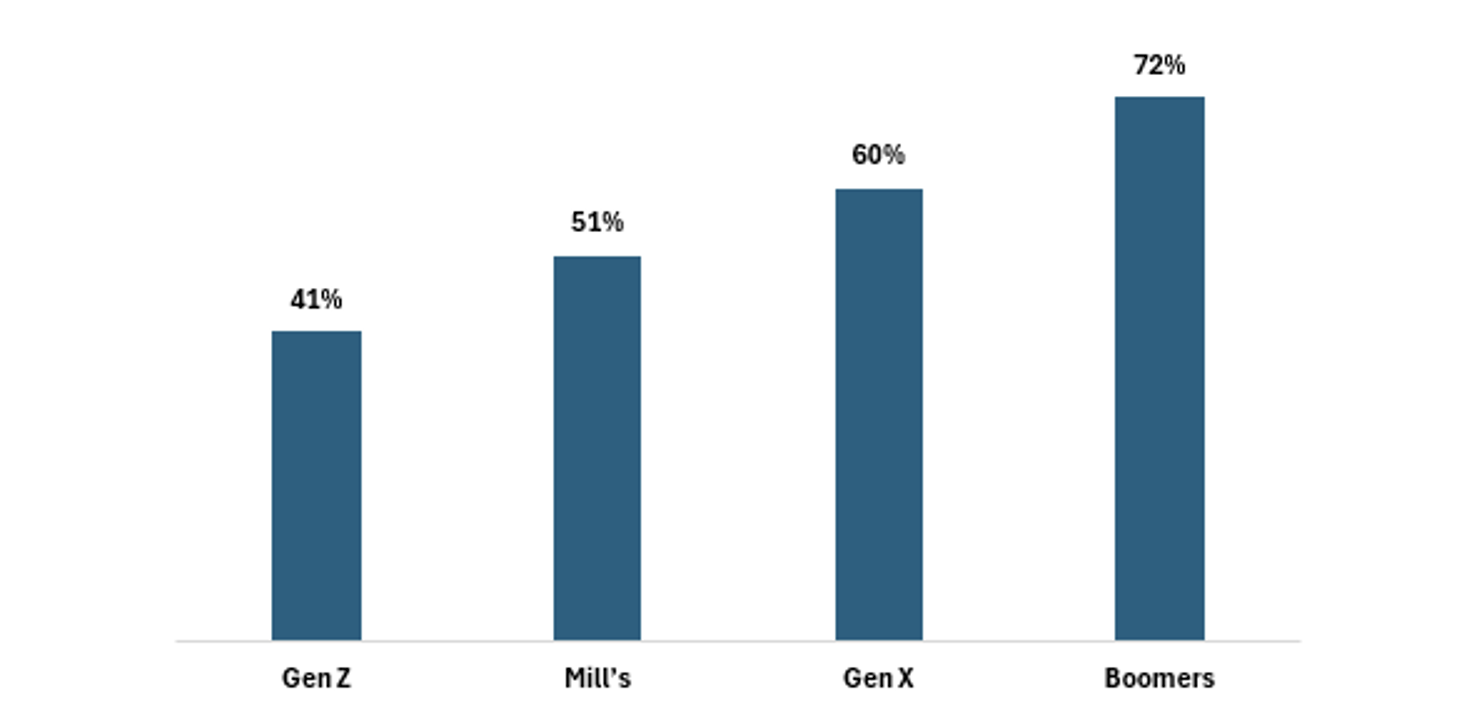
Among pet owners, as shown by Packaged Facts January 2026 Survey of Pet Owners data, only 41% of Gen Zers vs. 72% of Boomers list veterinarians as either the most important source or among the most important sources of pet care information (the survey question allowed for one or more selections. Though at lower percentages, in turn, more important for pet care information to Gen Z through Gen X pet owners, compared with Boomer pet owners, are pet specialty stores, the internet, and social media.
Share of Pet Owners Who Consider Veterinarians Among the Most Important Sources of Pet Care Information: By Generational Cohort, 2026
Source: Packaged Facts, US Pet Market Outlook, 2026-2027
Growing Retailer Involvement
In keeping with the retail-ization of vet services is a growing role for retailer involvement with pet insurance and wellness plans. Reflecting its strong revenue growth, pet insurance has, dollar-wise, topped the list of pet services categories since 2024, and rose to a 37% share of sector sales in 2025.
In tandem with the retail-ization of vet services, and as another facet of omnimarket strategies and one-stop shopping for pet care, leading retailers across channels are increasingly leveraging “hands-on” non-medical pet service offerings (groomers, trainers, and walkers/sitters). These pet services remain on good footing in the minds of pet owners, even as some are compelled to tighten their purse strings. Among Gen Zers, 44% highly value non-medical pet service providers in aggregate as sources of pet care information, compared with the 41% who highly value veterinarians for this information. Among Boomers, the figures are dramatically different, at 25% for non-medical service providers vs. 72% for veterinarians. While recent slower going in revenue growth for these hands-on pet services reflects macroeconomic and dog population headwinds, pet service prospects can be developed into a different story over the longer term.
"Hands-On" Services Protect Against Online Encroachment
An obvious advantage of “hands-on” services is that they are necessarily local, taking advantage of brick & mortar retailers’ physical store footprint, and thus protecting against pure-play e-commerce competition. In the years ahead, not only will retailers be more reliant upon services, but veterinary and non-medical pet service providers will be more reliant upon retailers.
Want to learn more? Check out Packaged Facts' new US Pet Market Outlook 2026-2027, or visit our Packaged Facts Pet Knowledge Center, your resource for in-depth pet market intelligence.
About the blogger: The former publisher and research director at Packaged Facts, a division of the Freedonia Group, David Sprinkle continues as market analyst as part of the Packaged Facts pet market team. His research focuses on pet population trends, pet owner demographics, pet industry retail/e-tail trends, and veterinary services. Sprinkle also provides monthly columns to Pet Care Weekly and to Petfood Industry, along with contributions to trade publications including PETS International and The Fountain Report. He has presented extensively at pet & vet market conferences, including Global Pet Expo, GlobalPETS Forum, Petfood Forum, VMX, the NAVC Veterinary Innovation & eCommerce Summit, and the Kansas City Animal Health Corridor Market Insight Seminar.