"Vibecession" is a word that could be a political/economics word of the year for 2024. In case you missed it, it’s a portmanteau of the words “vibes” and “recession” and refers to the disconnect between economic data and public perception of the economy — when people feel a recession, even when the economy doesn't show one.
Many blame or credit — depending on your political outlook — this disconnect for the 2024 US election outcomes, but the use of the term is not exclusive to the US economy and has been spreading in other countries as well.
Why This Disconnect?
These are my top three core points:
- Inequality. Yes, some people are doing well, and very few are doing very well, but many are not. Or at least they feel that they are not, especially in comparison to others or how they think they should be doing. The data classically used to define a recession is a big aggregate number that hides the differences across different population groups or segments of industry. Think of it like taking the average temperature of a home. The thermostat might be set at 72 degrees, but perhaps the front room is drafty, while the kitchen is uncomfortably hot with the oven running. In the same way, the "average" economic indicators we rely on often fail to capture these disparities and create statistical blind spots.
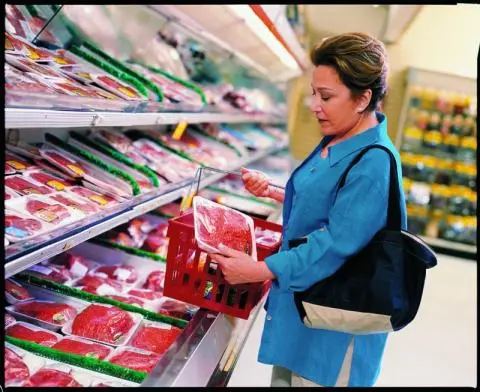
- Economies Are Personal. This means that everyday experiences matter but may not accurately reflect the economy at large. For instance, people are reminded of economic challenges each time they go grocery shopping and pay more than they remember paying. These frequent reminders of higher prices while on routine errands or while paying monthly bills create constant emotional friction that shapes our economic outlook.
- "The Good Old Days." Inflation is driving this one. Everyone thinks things were more affordable years ago "when candy bars cost 50 cents" or whatever triggers this feeling. But people don't really remember how long ago those "good old days" prices were the current prices. We tend to underestimate how long ago they were (I’m totally guilty of this, even though I’m my household’s shopper for almost everything). We also tend to forget that salaries were lower then, too. Similarly, our retained memories are often cherry picked from the happiest times or among the more favorable examples, while the challenges of the time are often remembered with less clarity.
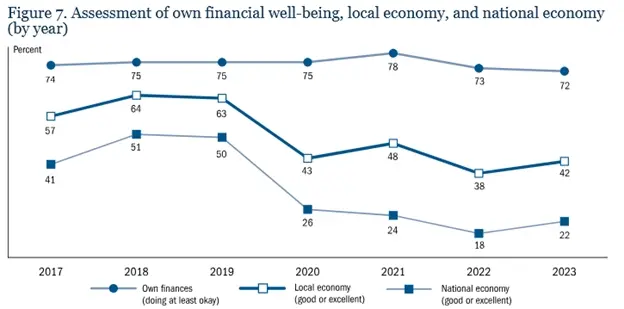
Looking at the most recent Report on the Economic Well-Being of US Households from the US Federal Reserve, the gap between the assessment of their personal economy and the economy at large — local or national — widened significantly in 2020.
Source: Report on the Economic Well-Being of US Households
What Does the Data Show?
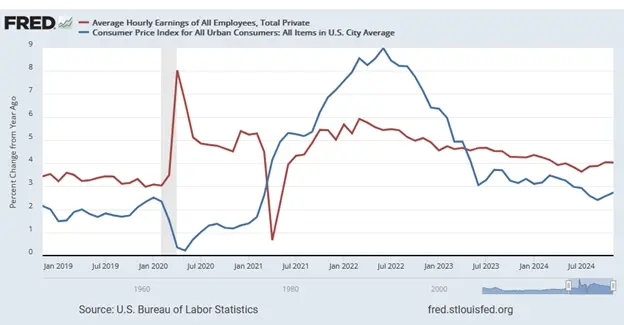
Core household spending is undoubtably more expensive: costs of housing, groceries, education, healthcare, childcare, and transportation are all undeniably higher than compared to 2019. However, average wage growth in the aggregate has been strong as well.
Source: Federal Reserve Bank of St. Louis captured 12/31/2024
The Freedonia Group has been tracking consumer sentiment through our own proprietary online consumer survey for many years. On the most recent edition (conducted in November 2024), we see that positive feelings about personal economic condition rises with age. For instance, 52% of Baby Boomers reported feeling strongly or somewhat positive about their current condition, while only 43% of adult Gen Z respondents felt the same. Baby Boomers responded strongly positively about their current economic condition at a rate 5 points above that of adult Gen Zs.
However, the tables turn when looking at the expectations for the near future. Adult Gen Z respondents reported strongly positive feelings for the “next few years,” 6 points above the responses from Baby Boomers.
What’s the Big Idea?
Understanding the concept of a "vibecession" isn't about dismissing people's economic anxiety — these feelings are real and valid. Instead, it's about recognizing the complex interplay between economic data, personal experience, and psychological factors that shape our perception of financial well-being.
Consumer spending depends on positive vibes — people make big ticket purchases and invest in their homes if they believe their economic situation is going to keep improving or is at least trending upward.
Consumers hold back on nonessential spending and tend to hesitate before making big purchases or outright delay arranging for home improvements, buying that new car, getting married, or starting a family until they feel more secure.
But it’s not just consumer spending.
Obviously, businesses are run by people, so how positive they feel about the economy in general and their own personal economy impacts their employment and business decisions. People change jobs, start businesses, and invest in their business if they expect growth or at least that good times are coming.
Businesses are more conservative in their decision making or retain cash over taking on debt when things feel less certain.
Strategic Implications
Recognize that aggregate market data may mask significant variation in segments. Be prepared to develop strategies that target different markets, price points, distribution options, and demographic cohorts; they might be experiencing the economy differently.
Consider the psychological impact of price changes on high-frequency purchase items. Be open to alternative pricing models that might mitigate negative sentiment. For instance, repeat subscription options are not only a chance to lock in a customer for longer term, but the spending is more likely to fade into the background compared to a bill consumers are actively witnessing regularly. Bulk pricing or providing upgrade features that solve a problem is another way to communicate value to consumers.
Be conscious of authenticity and be transparent when making a change in prices by including context and rationale. Tell the story so the customer is less likely to feel cheated (“shrinkflation” anyone?) and more likely to feel connected to your company’s journey.
Be aware of what your product or service is really competing against: a private label option? a discount retailer? a different product that serves a similar purpose? not buying anything at all?
Look for opportunities in value-priced options within your line or for products that feel more necessary because of the role they play in a person’s daily life or business operations.
For More Information
To learn more about the economic conditions that underpin all Freedonia research, sign up to download the latest edition of our short-run US economic forecast or the slide deck for our short-run global economic forecast. Both resources are developed by Freedonia’s own in-house economics team.
About the blogger:
Jennifer Mapes-Christ is a skilled industry analyst and brand manager, working as Freedonia’s manager of consumer and commercial goods research as well as Packaged Facts’ food and beverage research. She has more than 25 years of experience sizing markets, forecasting demand, tracking industry trends, and analyzing consumer trends and key market opportunities. Her analysis has appeared in The Wall Street Journal, NPR, Fortune, Washington Post, USA Today, New York Times, and a variety of other general interest and industry-specific publications.