US Kitchen Countertops
Demand for kitchen countertops in the US is forecast to rise 5.0% per year to 662 million square feet in 2026, valued at $37.3 billion.

Free Sample Report
Request a free sample of this report and our team will email it to you.
Report Overview
Featuring 31 tables and 19 figures – now available in Excel and Powerpoint! Learn More
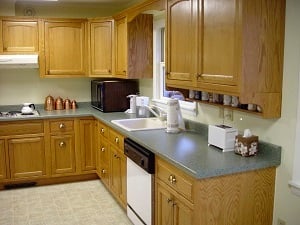
Demand for kitchen countertops in the US is forecast to rise 5.0% per year to 662 million square feet in 2026, valued at $37.3 billion. Gains will be supported by:
- consumer willingness to trade up to more expensive materials such as granite and engineered stone to improve home values
- trends favoring larger kitchens with more counter space, including kitchen islands and bar seating areas
- rising commercial building construction
- popularity of extended backsplashes in kitchen designs, particularly of materials that match the countertops themselves
New housing construction and home remodeling began to normalize in 2022 following exceedingly high levels in 2021. This trend will continue through the forecast period, limiting even greater demand gains.
Engineered Stone Surpasses Laminate as the Most Popular Kitchen Countertop Material
In 2021, engineered stone surpassed laminate to become the most used kitchen countertop material in the US, marking the first time in decades that laminate was not the most popular countertop material. Through 2026, engineered stone will significantly expand its leading market share to account for 44% of kitchen countertop demand in area terms:
- The rapid increase in low-cost slabs from foreign markets – particularly India, Turkey, and Vietnam – has made engineered stone countertops more affordable for middle-class homeowners.
- Consumers will continue to strongly prefer the aesthetics and quality of engineered stone over laminates, especially as engineered stone’s color availability expands.
Laminates will continue to fall out of favor, with more expensive types like natural stone seeing use instead.
Demand for Porcelain Slab Kitchen Countertops Grows Robustly
Rapidly rising in popularity as an alternative to engineered stone and granite, porcelain slab is expected to be the fastest growing kitchen countertop material. Porcelain slab appeals to consumers who want to differentiate their homes but still install countertops with a natural appearance and favorable performance properties, such as:
Historical Market Trends
Kitchen countertop demand is driven by a number of factors, including:
During the 2011-2021 period, kitchen countertop demand grew at a 5.1% annual rate, with only a slight decline in 2019 and stagnation in 2020 due to weakness in new construction. Significant single-family housing remodeling activity in the US supports a rather steady level of demand for kitchen countertops.
Demand by Market
Demand Forecasts
Demand for kitchen countertops is projected to rise 5.0% per year to 662 million square feet in 2026. The residential market is the dominant outlet for kitchen countertops, due to the sheer size of the US housing stock, as well as the popularity of countertop replacement in single-family housing.

Surface Materials
Demand by Material
Through 2026, demand for kitchen countertops is expected to expand 5.0% annually to 662 million square feet valued at $37.3 billion, supported by:
Engineered stone is projected to remain the leading kitchen countertop surface material, supported by:
Demand for laminates will continue to decline, as consumers in the residential market opt for more natural and aesthetically pleasing materials, such as wood, granite, porcelain slab, and engineered stone.
Industry Composition
- stain resistance in both indoor and outdoor settings, as well as heat and frost resistance, which makes porcelain a top choice for outdoor kitchens
- greater strength and durability when compared to granite
- absence of discoloration or color change issues
- wide variety of finishes, patterns, and colors available from manufacturers
- easy-to-clean, hygienic surface
- new housing construction
- single-family residential remodels, which often include the replacement of kitchen countertops or the addition of more kitchen countertop space
- commercial building construction
- shifts in consumer tastes, such as a change in preference toward countertops with a more natural stone aesthetic and away from laminates, resulting in increased demand in the residential remodeling market
- recreational vehicle and boat, civilian aircraft, railroad equipment, and heavy vehicle production
- increasing interest in kitchen renovations, during which the replacement of countertops is a key component
- ongoing consumer interest in adding islands and breakfast bars to kitchens
- growth in the construction of office, hospitality, and institutional buildings, which are likely to have kitchen facilities
- increasing popularity of outdoor kitchens
- shifts in the product mix favoring high-value materials at the expense of laminates
- its more pleasing aesthetics and greater durability than laminates
- rising use in commercial building applications
- continued market penetration, albeit at a more modest pace than during the 2016-2021 period
- While the laminate, solid surface, and engineered stone kitchen countertop segments are concentrated with fewer than 10 leading firms in each, the remaining material segments – such as natural stone, tile, and cast polymers – are highly fragmented and are without clear leaders.
- Cost leadership and product differentiation are two key competitive strategies utilized by countertop manufacturers.
- In recent years, product development activities in the kitchen countertop industry have included laminates with soft-touch matte finishes, metallic appearances, and embedded wireless electronic device charging capabilities.
- Distribution channels, which include master distributors, wholesalers, builders, and retailers, often vary depending upon the countertop material.
- Merger and acquisition activity is typically limited in the kitchen countertop industry as a result of the substantial differences between the types of materials used to make countertops. In general, producers of one type of countertop are unlikely to acquire firms making countertops from different materials.
- Marketing is a key barrier to entry for potential kitchen countertop suppliers, particularly in segments such as laminates and solid surface materials, where certain well-established brands dominate.
- Cooperative agreements, including licensing and distribution arrangements, are important means for countertop firms to access key technologies, expand into new markets, and bolster their presence in existing markets.
Engineered Stone Surpasses Laminate as the Most Popular Kitchen Countertop Material
In 2021, engineered stone surpassed laminate to become the most used kitchen countertop material in the US, marking the first time in decades that laminate was not the most popular countertop material. Through 2026, engineered stone will significantly expand its leading market share to account for 44% of kitchen countertop demand in area terms:
- The rapid increase in low-cost slabs from foreign markets – particularly India, Turkey, and Vietnam – has made engineered stone countertops more affordable for middle-class homeowners.
- Consumers will continue to strongly prefer the aesthetics and quality of engineered stone over laminates, especially as engineered stone’s color availability expands.
Laminates will continue to fall out of favor, with more expensive types like natural stone seeing use instead.
Demand for Porcelain Slab Kitchen Countertops Grows Robustly
Rapidly rising in popularity as an alternative to engineered stone and granite, porcelain slab is expected to be the fastest growing kitchen countertop material. Porcelain slab appeals to consumers who want to differentiate their homes but still install countertops with a natural appearance and favorable performance properties, such as:
Historical Market Trends
Kitchen countertop demand is driven by a number of factors, including:
During the 2011-2021 period, kitchen countertop demand grew at a 5.1% annual rate, with only a slight decline in 2019 and stagnation in 2020 due to weakness in new construction. Significant single-family housing remodeling activity in the US supports a rather steady level of demand for kitchen countertops.
Demand by Market
Demand Forecasts
Demand for kitchen countertops is projected to rise 5.0% per year to 662 million square feet in 2026. The residential market is the dominant outlet for kitchen countertops, due to the sheer size of the US housing stock, as well as the popularity of countertop replacement in single-family housing.

Surface Materials
Demand by Material
Through 2026, demand for kitchen countertops is expected to expand 5.0% annually to 662 million square feet valued at $37.3 billion, supported by:
Engineered stone is projected to remain the leading kitchen countertop surface material, supported by:
Demand for laminates will continue to decline, as consumers in the residential market opt for more natural and aesthetically pleasing materials, such as wood, granite, porcelain slab, and engineered stone.
Industry Composition
- stain resistance in both indoor and outdoor settings, as well as heat and frost resistance, which makes porcelain a top choice for outdoor kitchens
- greater strength and durability when compared to granite
- absence of discoloration or color change issues
- wide variety of finishes, patterns, and colors available from manufacturers
- easy-to-clean, hygienic surface
- new housing construction
- single-family residential remodels, which often include the replacement of kitchen countertops or the addition of more kitchen countertop space
- commercial building construction
- shifts in consumer tastes, such as a change in preference toward countertops with a more natural stone aesthetic and away from laminates, resulting in increased demand in the residential remodeling market
- recreational vehicle and boat, civilian aircraft, railroad equipment, and heavy vehicle production
- increasing interest in kitchen renovations, during which the replacement of countertops is a key component
- ongoing consumer interest in adding islands and breakfast bars to kitchens
- growth in the construction of office, hospitality, and institutional buildings, which are likely to have kitchen facilities
- increasing popularity of outdoor kitchens
- shifts in the product mix favoring high-value materials at the expense of laminates
- its more pleasing aesthetics and greater durability than laminates
- rising use in commercial building applications
- continued market penetration, albeit at a more modest pace than during the 2016-2021 period
- While the laminate, solid surface, and engineered stone kitchen countertop segments are concentrated with fewer than 10 leading firms in each, the remaining material segments – such as natural stone, tile, and cast polymers – are highly fragmented and are without clear leaders.
- Cost leadership and product differentiation are two key competitive strategies utilized by countertop manufacturers.
- In recent years, product development activities in the kitchen countertop industry have included laminates with soft-touch matte finishes, metallic appearances, and embedded wireless electronic device charging capabilities.
- Distribution channels, which include master distributors, wholesalers, builders, and retailers, often vary depending upon the countertop material.
- Merger and acquisition activity is typically limited in the kitchen countertop industry as a result of the substantial differences between the types of materials used to make countertops. In general, producers of one type of countertop are unlikely to acquire firms making countertops from different materials.
- Marketing is a key barrier to entry for potential kitchen countertop suppliers, particularly in segments such as laminates and solid surface materials, where certain well-established brands dominate.
- Cooperative agreements, including licensing and distribution arrangements, are important means for countertop firms to access key technologies, expand into new markets, and bolster their presence in existing markets.
- Executive Summary
- Figure 1-1 | Kitchen Countertops Market
- About This Report
- Report Details
- Scope & Product Description
- Figure 2-1 | Kitchen Countertops: Product Examples
- Impact of COVID-19 Pandemic
- Table | Annual Kitchen Countertop Demand by Market & Project Type, 2019 - 2022
- Figure 2-2 | Kitchen Countertop Volume Demand by Market, 2019 - 2023
- Overview
- Historical Market Trends
- Table | Kitchen Countertop Demand, 2011 - 2021
- Figure 3-1 | Kitchen Countertop Demand, 2007 - 2021
- Demand by Market
- Demand Forecasts
- Table | Kitchen Countertop Demand by Market, 2011 - 2031
- Figure 3-2 | Kitchen Countertop Demand by Market, 2011 - 2031
- Residential
- Table | Residential Kitchen Countertop Demand by Surface Material, 2011 - 2031
- Commercial
- Table | Commercial Kitchen Countertop Demand by Surface Material, 2011 - 2031
- Vehicles
- Table | Vehicle Kitchen Countertop Demand by Surface Material, 2011 - 2031
- Demand Forecasts
- Demand by Project Type
- Demand Forecasts
- Table | Kitchen Countertop Demand by Project Type, 2011 - 2031
- Figure 3-3 | Kitchen Countertop Demand by Project Type, 2011 - 2031
- New Kitchens
- Table | New Kitchen Countertop Demand by Surface Material & Market, 2011 - 2031
- Kitchen Remodeling
- Table | Kitchen Countertop Remodeling Demand by Surface Material & Market, 2011 - 2031
- Demand Forecasts
- Pricing Trends
- Table | Kitchen Countertop Pricing by Surface Material, 2011 - 2031
- Figure 3-4 | Kitchen Countertop Pricing by Surface Material, 2011 - 2031
- Installation Costs
- Figure 3-5 | Countertop Installation Costs by Surface Material, 2021
- Figure 3-6 | Average Final Installed Countertop Price by Surface Material, 2021
- Sustainability Trends
- Green Building Initiatives
- Recycling & Recycled Content
- Health Concerns
- Product Quality Standards
- Historical Market Trends
- Surface Materials
- Demand by Material
- Table | Kitchen Countertop Demand by Surface Material, 2011 - 2031
- Figure 4-1 | Kitchen Countertop Demand by Surface Material, 2011 - 2031
- Engineered Stone Countertops
- Table | Engineered Stone Kitchen Countertop Demand by Market, 2011 - 2031
- Figure 4-2 | Engineered Stone Kitchen Countertop Demand by Market, 2011 - 2031
- Laminate Countertops
- Table | Laminate Kitchen Countertop Demand by Market, 2011 - 2031
- Figure 4-3 | Laminate Kitchen Countertop Demand by Market, 2011 - 2031
- Natural Stone Countertops
- Table | Natural Stone Kitchen Countertop Demand by Market, 2011 - 2031
- Figure 4-4 | Natural Stone Kitchen Countertop Demand by Market, 2011 - 2031
- Solid Surface & Other Cast Polymers Countertops
- Table | Solid Surface & Other Cast Polymer Kitchen Countertop Demand by Market, 2011 - 2031
- Figure 4-5 | Solid Surface & Other Cast Polymer Kitchen Countertop Demand by Market, 2011 - 2031
- Tile Countertops
- Table | Tile Kitchen Countertop Demand by Market, 2011 - 2031
- Figure 4-6 | Tile Kitchen Countertop Demand by Market, 2011 - 2031
- Porcelain Slab/Sintered Stone Countertops
- Table | Porcelain Slab/Sintered Stone Kitchen Countertop Demand by Market, 2011 - 2031
- Figure 4-7 | Porcelain Slab/Sintered Stone Kitchen Countertop Demand by Market, 2011 - 2031
- Other Materials
- Table | Other Kitchen Countertop Material Demand by Market, 2011 - 2031
- Figure 4-8 | Other Kitchen Countertop Material Demand by Market, 2011 - 2031
- Demand by Material
- Key Suppliers & Industry Structure
- Industry Composition
- Key Suppliers
- Mergers & Acquisitions
- Table | Selected Mergers & Acquisitions
- Marketing
- Appendix
- Scope
- Table | Relevant Industry Codes
- Table | Relevant HS Codes
- Definitions
- Freedonia Methodology
- Study-Specific Methodology
- Sources
- Associations & Agencies
- Related Studies & Reports
- Macroeconomic Assumptions
- Economic Environment
- Table | Macroeconomic Indicators, 2011 - 2031
- Demographic Trends
- Table | Population & Households, 2011 - 2031
- Building Construction
- Table | Building Construction Expenditures, 2011 - 2031
- Residential Building Construction
- Table | Residential Building Construction Expenditures, 2011 - 2031
- Residential Improvements & Repairs
- Table | Residential Improvement & Repair Expenditures, 2011 - 2031
- Commercial Building Construction
- Table | Commercial Building Construction Expenditures, 2011 - 2031
- Commercial Building Improvements & Repairs
- Table | Commercial Building Improvement & Repair Expenditures, 2011 - 2031
- Housing Completions
- Table | New Housing Indicators, 2011 - 2031
- Figure 6-1 | New Housing Square Footage by Housing Type, 2006 - 2021
- Housing Stock
- Table | Housing Stock by Type, 2011 - 2031
- Figure 6-2 | Housing Stock: Share by Year of Construction, 2021
- Consumer Financing
- Table | Consumer Financing Environment, 2011 - 2021
- Economic Environment
- Scope
The market for kitchen countertops in the US reached $24.6 billion
Porcelain slab will be the fastest growing material, boosted by its growing popularity as an alternative to engineered stone and granite.
Leading players include Wilsonart, Cambria, Caesarstone, Formica, Panolam, DuPont, Cosentino, and LX Hausys.