Report Overview
“The outdoor living products industry is facing some challenges in 2023, but there are also a number of opportunities,” said Jennifer Mapes-Christ, Manager of Consumer Research at Freedonia Group.
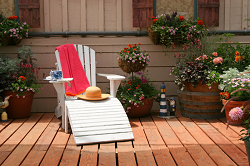
This Freedonia industry study analyzes the $43 billion US outdoor living product market. It presents historical demand data (2021 and 2022) and forecasts (2023) for products by application (lawn and yard maintenance; outdoor cooking, entertaining, and recreation; gardening; and outdoor design and landscaping products).
- Lawn and yard maintenance products include lawn and yard power equipment; lawn care consumables (both organic and non-organic formulations); and lawn watering products.
- Outdoor cooking, entertaining, and recreation products include outdoor furniture; grills; heating products; and outdoor kitchen equipment.
- Gardening products include garden consumables (both organic and non-organic formulations), power garden equipment, pots and planters, and garden watering and other products).
- Outdoor design and landscape products include hardscaping; water features; outdoor lighting; and outdoor structures.
The study also identifies top consumer trends and evaluates data-driven consumer insights from psychographics to trends in habits. This information comes from a proprietary national survey (The Freedonia Group National Online Consumer Survey, conducted quarterly throughout the year) and syndicated consumer research data. This data is cross-tabbed by key demographic segments -- gender, age group, urban vs. rural setting, region, type of housing, and presence of children under 18 at home.
Featuring 59 tables and 6 figures – available in Excel and Powerpoint! Learn More
See the blog on the Top 6 Outdoor Living Trends
US demand for outdoor living products is forecast to decline 5.1% to $41 billion in 2023, reflecting the elevated 2022 base. Despite this decline, 2023 spending levels are still above 2020 – and certainly above pre-pandemic – levels due to the expansion of the customer base during the pandemic. Even in segments with limited additional growth (or even declines) into 2023, maintaining the high levels of 2020 is an achievement.
Inflationary Trends Impact Outdoor Living Spending
Near term growth rates for many segments will be challenged by an inflationary environment that is increasingly fostering price sensitivity. Consumers are looking for value, not just a low cost. In some cases, gains in value terms in 2022 stemmed from price increases more than sales volume gains. However, interest in value-added versions slipped as customers found the high prices challenging to their budgets.
DIY vs. DIFM
Many US consumers have embraced a DIY ethic regarding home improvement and landscaping projects. The widespread availability of home improvement information – both practical advice from experts and inspirational content from social media influencers on TikTok, Instagram, and other outlets – helps to maintain this trend.
However, use of DIFM landscaping services has grown again as consumers return to pre-pandemic habits. Still, that trend has been somewhat counterbalanced by rising inflation, which has led many consumers to economize and cancel some services. Furthermore, the shortage of professional landscape workers has made such services either too expensive or too unreliable for some homeowners.
Innovations Continue to Boost Both New & Upgrade Sales
Opportunities where innovative companies can respond to consumer interest include sustainable products, indoor/outdoor integration, smart technology and automation, and items that make outdoor maintenance work easier or more convenient:
- Key sustainability features include organic products, those that minimize water use/waste, those that use electric power, and those that incorporate more recycled content in production.
- Consumers are increasingly using more comfortable, functional, and aesthetically appealing elements integrate their indoor and outdoor spaces:
- Smart technology – most widely seen in mowers and irrigation controls – can be used to make a piece of equipment easier to use, make a chore less burdensome, and make operation more efficient.
- Features that make equipment easier to use or tasks easier to accomplish will support sales across the demographic spectrum, from aging consumers less able to do work they once did to younger consumers with less time available to handle outdoor maintenance chores.
Urbanites & Outdoor Living
Growth in the urban population impacts the outdoor living market by affecting the types and quantities of products purchased, as outdoor spaces in urban residences tends to be limited (e.g., small yards, private balconies, fire escapes) and/or communal (e.g., rooftop gardens and green spaces, courtyards, pool and spa areas). Millennials are the most likely age group to live in urban areas due to:
- affordability issues in the housing market that have promoted renting over owning among this cohort
- the availability of jobs and proximity to nightlife, entertainment venues, retail amenities, and public transportation
Therefore, many of the demographic trends affecting millennials – such as the rise of community gardens and community support agriculture – also apply to urbanites.
Urbanites typically have much smaller outdoor spaces (often without a lawn) than consumers who live in rural or suburban locales. As such, growth in urban living limits gains for products like power lawn and garden equipment, but it supports sales of products for indoor or container gardening, such as pots and planters and small indoor plants.
Many urban residents are also interested in protecting the environment, preferring natural and organic products when possible, such as durable items made from post-consumer recycled materials and environmentally friendly consumables. Numerous urban households are also embracing hydroponics and legal cannabis growing, and many view gardening as a craft, therefore seeking specialty, high-value gardening products.
Reduced Air & Noise Pollution
The effect on air quality is a key concern for consumers who wish to be more environmentally responsible when making purchasing decisions about power lawn and garden equipment. In response to both emission regulations and consumer demand for eco-friendly products, lawn and garden equipment suppliers have:
- added lines of propane engines, which create fewer emissions than gasoline engines and can have longer useful lives
- expanded their production of electric equipment, which is not subject to the same emissions standards as products powered by ICEs
- modified two-stroke engine systems, such as by using catalytic converters, to reduce emissions
- developed smaller four-stroke systems for handheld equipment
Noise pollution is also an important concern, as leaf blowers, mowers, tractors, and other power equipment can generate significant noise. Many US cities – especially on the East and West coasts – have regulations for leaf blowers that can limit operation to certain times of day, restrict use of specific types of products, or even ban leaf blowers.
To address these restrictions, power lawn and garden equipment manufacturers offer quieter gas-powered equipment or electric-powered products, which are typically quieter than engine-driven machinery.
Lot Size by Locations
Power lawn and garden equipment purchases and ownership are strongly impacted by the amount of yard and outdoor space at a residence, and by the location of the yard:
- Residents in rural areas and outer suburbs are more likely to need lawn mowers with larger decks and to cover more ground as they are more likely to have large yards. However, suburban residents are increasingly interested in such equipment to make mowing tasks easier to complete faster.
- Urban residents with limited outdoor space may use smaller pieces of equipment due to smaller yards, but manual and electric versions are also more widely used to limit noise in these settings, which feature greater population and residential density.
Most US homes have a lawn, garden, or outdoor space – whether it is an owned space, part of rented land, or a common use space for multifamily dwellings. A higher-than-average percentage of homes in suburban and rural areas has these features, in contrast to urban dwellings. Urbanites and others who live in apartment and condominium complexes are most likely to have common outdoor spaces, lawns, and gardens. Townhome owners sometimes have their own private outdoor spaces, while others only have access to common spaces.
Lot sizes also vary by geographic region. West residents were most likely to report having less than 1/4 acre of land around their home. In contrast, large lots – more than 4 acres – were more prevalent in South region; 10% of the respondents there reported having that much land.
Remodeling Drives Outdoor Living Installations
Outdoor living product purchases are more often made for use in a remodeling project than as part of new home construction. Common outdoor living renovations typically include:
- landscaping
- decks and patios
- dining sets and chat groups
- fire pits and fireplaces
- outdoor kitchens
- pools and spas
Often, homeowners will have a designer or contractor manage the installation of several of these projects to ensure greater consistency in the style and quality of the overall project. However, the development of prefabricated islands and modular systems for outdoor kitchen installations continues to reduce homeowners’ reliance on professionals for these projects, since they are already designed (typically with some customization options) and can be installed more easily than site-built structures.